How to Reduce Noise and Vibration from Old Air Conditioner Outdoor Units
As the weather gets hotter, more households begin using air conditioners.
At the same time, complaints about outdoor unit noise often increase, especially in apartments and residential buildings.
Old air conditioner outdoor units may produce a loud humming sound, rattling vibration, or low-frequency noise that travels through walls, floors, railings, or balconies.
Although it may seem like a simple mechanical sound, it can cause stress, sleep disturbance, and conflict between neighbors.
That is why it is important to identify the cause early and take practical steps to reduce the noise and vibration.
1. Why Do Old Outdoor Units Become Noisy?
There are several reasons why old air conditioner outdoor units become louder over time.
One common cause is the aging of the fan motor and compressor.
As parts wear out, the unit may lose balance during operation, creating louder mechanical noise.
Another cause is poor leveling or loose fixing bolts.
If the outdoor unit is tilted or not firmly fixed, it can shake while operating. In some cases, the mounting bracket, railing, or wall may vibrate together and make the noise feel even louder.
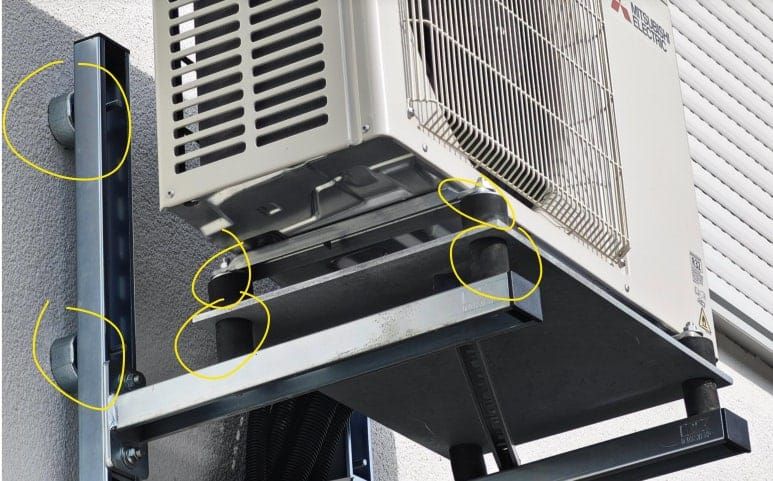
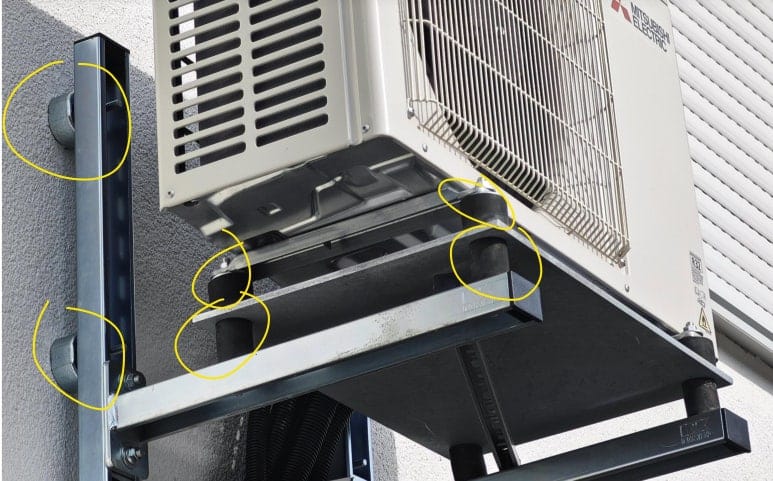
Worn-out anti-vibration rubber pads can also be a problem.
When rubber pads become hard, compressed, or damaged, they lose their ability to absorb vibration.
2. Check Where the Noise Is Coming From
Before replacing the unit, it is important to check the source of the noise.
Try to identify whether the sound is coming from:
- The outdoor unit itself
- The mounting bracket or base
- The balcony railing or wall
- A specific time of day or night
- Stronger cooling operation
This simple check can help determine whether the problem can be solved with basic maintenance or if professional inspection is needed.
3. Replace Anti-Vibration Pads
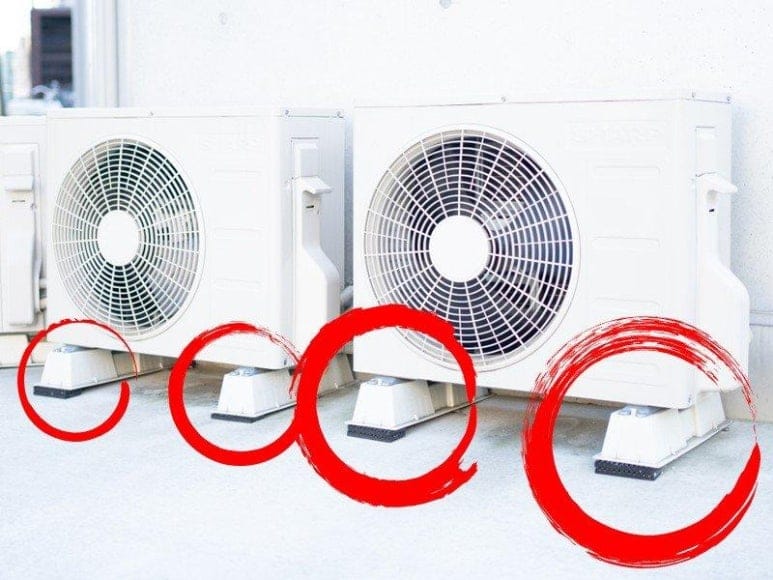
One of the most basic ways to reduce outdoor unit vibration is to replace the anti-vibration pads.
Old rubber pads may no longer absorb vibration properly.
When this happens, vibration from the outdoor unit can transfer directly to the floor, bracket, railing, or wall.
When replacing anti-vibration pads, choose products that can support the weight of the outdoor unit.
After installation, make sure the unit is stable and does not shake.
4. Check Leveling and Fixing Conditions
If the outdoor unit is not level, vibration can become worse during operation.
Check whether the unit is properly leveled, whether the fixing bolts are loose, and whether the base or bracket is stable.
For balcony or wall-mounted outdoor units, metal brackets and railings may vibrate together and amplify the sound.
However, outdoor units installed on exterior walls or railings can be dangerous to handle. In such cases, it is safer to ask a professional technician or building management office for inspection.
5. Keep the Area Clean and Well Ventilated
Dust, leaves, plastic bags, boxes, or flowerpots around the outdoor unit can block airflow.
When airflow is blocked, the unit has to work harder, which can increase noise and reduce cooling efficiency.
Keep the front and surrounding area of the outdoor unit clear.
Avoid covering the unit too tightly in an attempt to block noise, as this may cause overheating or mechanical problems.
If a soundproof cover is used, it should be designed to maintain proper ventilation.
6. Inspect Internal Parts or Consider Replacement
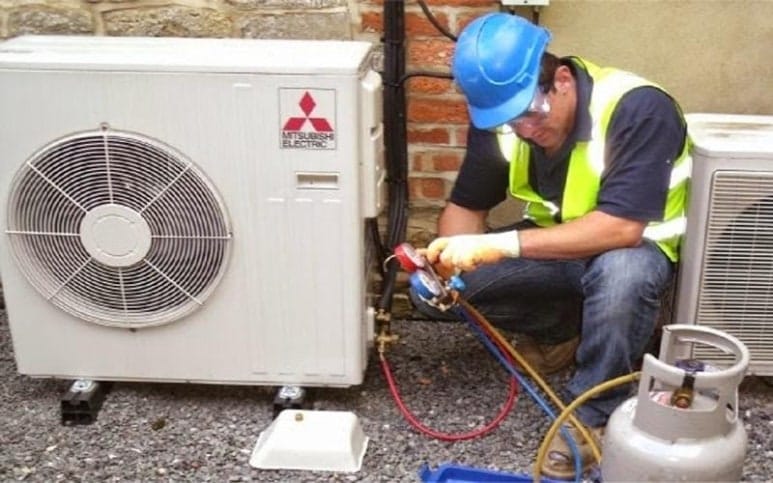
If noise continues even after replacing anti-vibration pads and checking the level, the problem may be inside the unit.
Professional inspection is recommended when:
- There is a scraping or metallic sound
- The fan seems unstable
- Noise suddenly becomes much louder
- Vibration travels through the wall or floor
- A low-frequency humming sound is noticeable at night
The fan motor, compressor, bearings, or other internal parts may need repair.
If the unit is very old and repair costs are high, replacing it with a newer and quieter model may be a more practical option.
7. How to Prevent Neighbor Conflicts
Outdoor unit noise often becomes a repeated issue during summer.
If you are affected by the noise, record the time, location, and sound characteristics.
For example:
“After 11 p.m., a humming sound is heard near the bedroom wall.”
“Rattling vibration begins shortly after the outdoor unit starts operating.”
These details make it easier to explain the situation to the building management office or a technician.
Instead of confronting neighbors emotionally, it is better to communicate through the building management office.
A calm and objective approach can help reduce conflict and lead to a more practical solution.
Conclusion
Noise and vibration from old air conditioner outdoor units should not be ignored.
Even a small vibration can feel much more stressful at night, especially in apartments where sound can travel through walls, floors, and railings.
A practical order of action is:
Clear the area → Check leveling → Replace anti-vibration pads → Check fixing bolts and brackets → Request professional inspection → Consider replacement if needed
Outdoor unit noise can often be reduced when the cause is identified correctly.
A small amount of maintenance today can help create a quieter and more comfortable living environment for everyone.
The Housing Culture Improvement Institute will continue to provide practical information to help reduce residential noise problems and prevent unnecessary conflicts between neighbors.
#AirConditionerNoise #OutdoorUnitNoise #VibrationReduction #OldAirConditioner #ApartmentNoise #ResidentialNoise #SummerNoise #NeighborConflict #HousingCultureImprovementInstitute