Learning from Real Construction Damage Compensation Cases ① Why Resident-Measured Noise Levels Can Put Apartment Residents at a Disadvantage
Residents often measure construction noise themselves and submit high decibel readings to contractors. But measurement methods, equipment, construction phases and delayed reviews can make these records difficult to use in compensation negotiations.
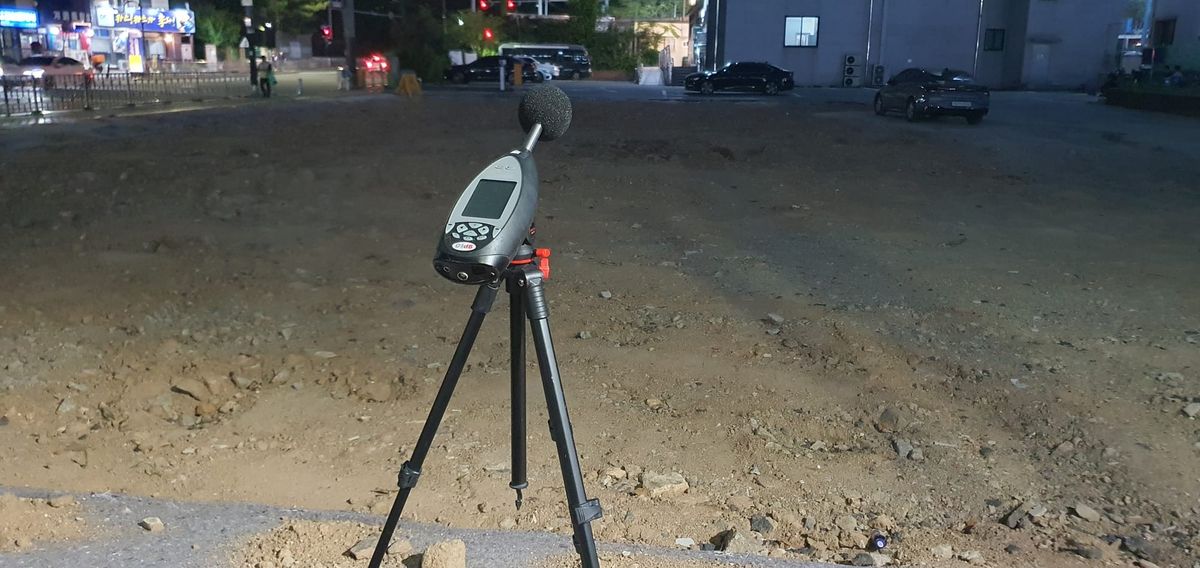
When major construction begins near an apartment complex, one of the first things residents often do is measure the construction noise themselves.
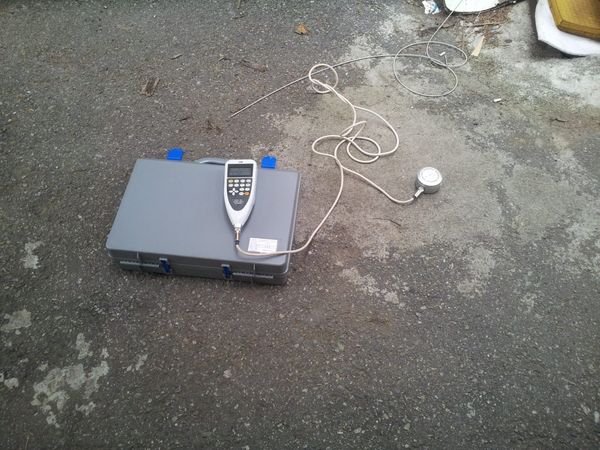
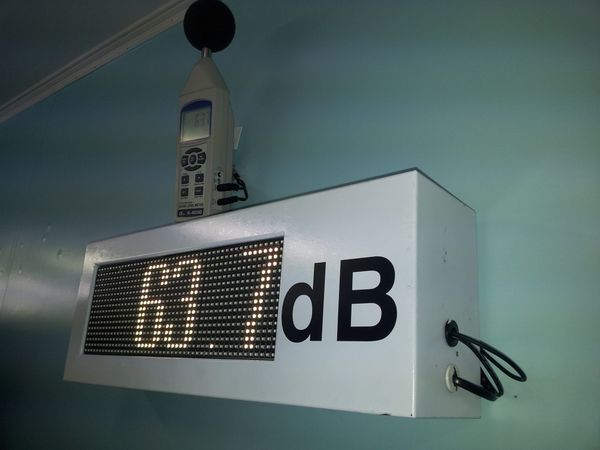
They may use a smartphone noise app or a personally purchased sound level meter and record readings such as:
“The construction noise exceeded 75 dB.”
“If the noise is this high, shouldn’t we be entitled to compensation?”
Residents then submit these readings to the contractor expecting them to become evidence for compensation.
But in actual construction-damage compensation negotiations, a high noise reading alone may not be enough to establish a compensation claim.
There is another, potentially more serious problem.
While residents wait for the contractor to review their measurements, construction continues.
Excavation may finish. Foundation work may be completed. Structural work may advance. And some of the loudest or most vibration-intensive construction phases may already be over.
In Part 1 of our series, “Learning from Real Construction Damage Compensation Cases,” we examine why resident-measured noise levels can become a weak point in compensation negotiations—and why the timing of the response may matter even more than the number on the sound level meter.
1. The Key Question Is Not Only “How Many Decibels?” but “How Was It Measured?”
Most apartment residents are not professional noise investigators.
Using a smartphone app or a personal sound level meter can still be useful for documenting what residents experienced at a particular time.
But a compensation negotiation raises different questions.
The contractor may ask:
What measuring device was used?
Where was the measurement taken?
How long was the noise measured?
What construction activity was taking place at the time?
Was there other background noise?
How was the construction site identified as the source of the measured noise?
This creates an important distinction:
Experiencing serious construction noise and producing measurement data that the contractor accepts as objective evidence are not necessarily the same thing.
For compensation purposes, the credibility of the measurement method, equipment, location, timing, and surrounding conditions can become just as important as the recorded decibel level.
2. A 75 dB Reading Does Not Automatically Mean the Contractor Will Accept It
Suppose a resident records a noise level of 75 dB during construction.
From the resident’s perspective, the conclusion may seem obvious:
“The reading is 75 dB. We have evidence that the construction noise was excessive.”
The contractor, however, may challenge the reliability or relevance of that measurement.
Was the equipment appropriate?
Was the measurement taken in a suitable location?
What other noise sources were present?
Which construction activity was underway?
Was the reading an instantaneous peak or part of a longer measurement?
Can the recorded sound reasonably be connected to the construction site?
Residents may therefore find themselves in a frustrating position:
“We experienced the noise. We even measured it. Why won’t the contractor accept it?”
The answer is that a noise reading and an accepted compensation assessment are two different things.
Resident measurements should not necessarily be discarded. They may still serve as supporting documentation.
But relying on a single number as the main basis for compensation can put residents at a disadvantage.
3. The Bigger Risk: “We Will Report It to Head Office”
This is one of the most important issues we see in construction-damage cases.
Residents collect their noise records and submit them to the contractor.
The site representative may respond:
“We will report this to our head office for review.”
Residents wait.
One month passes.
Then two months.
Internal discussions and reviews may continue for much longer.
Residents often assume:
“Head office is reviewing our case, so we should wait for the answer.”
But there is a critical problem.
Construction does not stop while residents wait for the contractor’s decision.
Excavation continues.
Foundation work progresses.
The structural frame rises.
Heavy equipment may leave the site.
Some of the noisiest and most vibration-intensive phases may already be completed.
After several months, residents may finally hear:
“Head office reviewed the claim, but the company does not accept the submitted data as a basis for compensation.”
Now the residents have a much more difficult problem.
The construction activity that caused the most serious disturbance may already be over.
Trying to reconstruct those conditions months later can be far more difficult.
4. Losing Time Can Be More Damaging Than Losing a Noise Reading
Residents often imagine the compensation process like this:
High noise reading → Submit it to contractor → Damage recognized → Compensation
In practice, construction-damage compensation is much more complicated.
A more realistic process is:
Early response → Identify the potentially affected area → Proper documentation → Track major construction phases → Build objective evidence → Communicate with contractor → Negotiate compensation
Noise measurements are only one component of this process.
This is why waiting several months simply because a contractor says the case is “under review” can be risky.
In some cases, the most valuable thing residents lose is not a particular measurement.
It is time.
5. Construction Damage Should Be Documented While Construction Is Still Underway
Waiting until most of the project is completed before beginning a compensation strategy can make evidence collection much more difficult.
While construction is underway, residents should understand factors such as:
Which construction activities are producing the strongest noise or vibration?
How far is each apartment building from the construction site?
Which buildings are directly exposed to the site?
When are the most disruptive construction phases occurring?
Which areas of the apartment complex appear to be most affected?
What records are being collected while those activities are actually taking place?
This is why construction damage should not be evaluated solely through a single decibel reading.
Distance, construction phase, exposure conditions, duration, noise and vibration records, and the overall impact area may all become relevant to the compensation discussion.
6. Resident Measurements Are Still Useful—If They Are Used Correctly
A smartphone reading or personal sound meter record is not necessarily useless.
It can help document when residents experienced serious disturbance.
But instead of recording only:
“78 dB today.”
a more useful record might include:
Date → Time → Location → Construction activity → Type of sound → Duration → Photo/video → Noise reading
This creates a timeline connecting the resident’s experience with actual construction activity.
The important point is not to treat resident-generated measurements as the only evidence needed for compensation.
They are better understood as one part of a larger documentation strategy.
7. Why Professional Support Is About More Than Measuring Noise
Residents sometimes assume that a professional is needed simply because a professional can operate a sound level meter.
That is only part of the issue.
The more important task is developing an overall compensation strategy while construction is still underway.
For example:
How far are the affected apartment buildings from the construction site?
Which buildings have the greatest direct exposure?
Which construction phases are likely to generate significant noise and vibration?
When should evidence be collected?
How should resident records be organized?
When should discussions with the contractor begin?
How can comparable construction-damage and environmental dispute cases be used in negotiations?
The real objective is therefore not simply to produce a higher-quality decibel reading.
The objective is to connect technical evidence, construction conditions, the affected area, and timing to a workable compensation strategy.
Why HCRI Emphasizes Early Action
The Housing Culture Improvement Research Institute (HCRI) has extensive experience working with residential environmental impacts associated with construction projects, including noise, vibration, dust, and compensation disputes.
In construction-damage cases, HCRI does not look only at a single noise reading.
The broader assessment may consider the construction schedule, distance between the site and apartment buildings, major construction activities, potentially affected areas, noise and vibration records, duration of exposure, comparable cases, and the progress of negotiations with the contractor.
One of the most important objectives is to prevent residents from losing valuable time while waiting for an internal contractor review.
Because one fact does not change:
Construction continues while compensation discussions are delayed.
Final Takeaway: Timing May Matter More Than a High Decibel Reading
Residents should document construction noise.
Photos, videos, written logs, and noise measurements can all contribute to understanding what happened.
The mistake is assuming:
“If we record a high enough decibel level, compensation will automatically follow.”
The contractor may dispute the measurement method.
It may question the equipment.
It may challenge the relationship between the recorded sound and its construction activities.
And while those arguments continue, the project keeps moving forward.
Several months later, residents may learn that the contractor’s head office does not accept their claim—after the most important construction phase has already ended.
For construction-damage compensation, the objective should therefore be broader than obtaining a high noise reading.
Document the impact while it is occurring, build objective evidence, understand the construction process, and prepare negotiations before the critical construction phases are over.
In some construction-damage cases, the greatest disadvantage is not an inaccurate noise measurement. It is responding too late.