Why Do Some Apartment Complexes Receive Construction Compensation While Others Do Not?
Many residents believe construction compensation depends only on noise levels. Based on over 25 years of field experience, HCRI explains why distance, early organization, resident committees, and long-term communication often have a much greater impact on successful compensation outcomes.
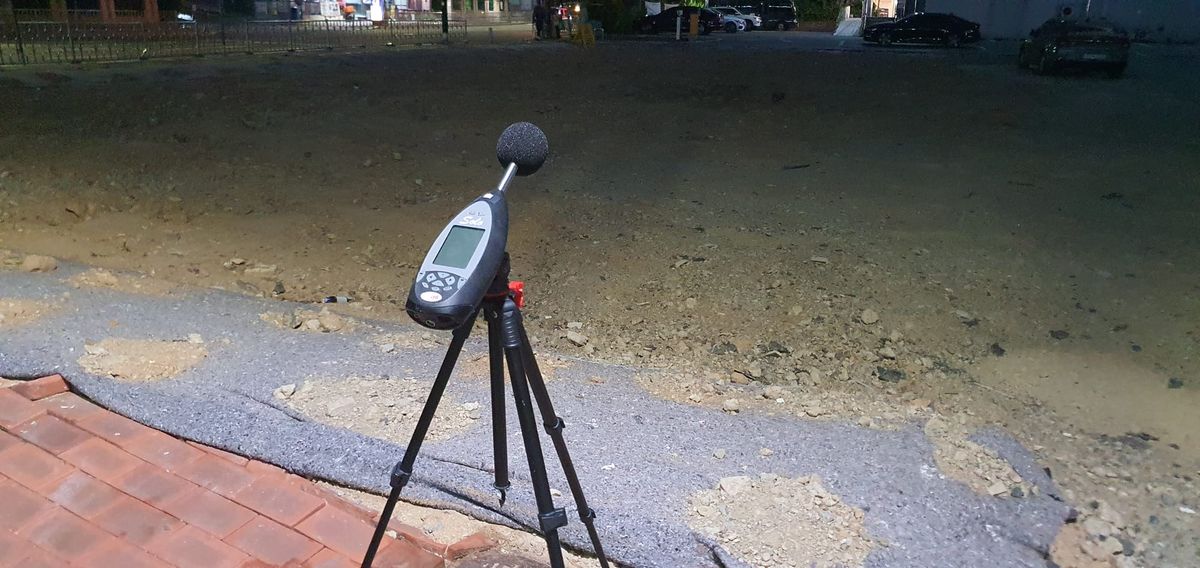
What Really Determines Construction Damage Compensation?
When a large redevelopment or reconstruction project begins, residents living nearby often ask the same question:
"The apartment complex next to ours received compensation. Why didn't we?"
After more than 25 years of investigating construction-related environmental impacts in South Korea, we have found that compensation is rarely determined by a single factor.
Noise alone does not decide the outcome.
Instead, successful compensation depends on several practical conditions that many residents are unaware of.
Distance Is the Most Important Starting Point
One of the first factors considered during compensation discussions is the distance between the construction site and the affected residential buildings.
In many Korean construction projects, apartment complexes located within approximately 60 meters (about 200 feet) of the construction boundary are commonly included in compensation negotiations.
This is not a legal rule that applies to every project, but it is one of the most influential practical criteria used during negotiations.
Even Apartments in the Same Complex May Receive Different Results
Many people assume that everyone living in the same apartment complex experiences the same level of impact.
In reality, this is rarely the case.
Several factors influence the extent of environmental impacts, including:
- Whether a building directly faces the construction site
- The number of affected households
- Building orientation
- Construction stages
- Local topography
As a result, compensation outcomes may differ even within the same apartment complex.
Early Action Makes a Significant Difference
One of the biggest differences we have observed is when residents begin communicating with the developer.
Apartment communities that organize early—when construction has just begun—typically have more time to discuss environmental concerns and possible compensation.
Communities that wait until the project is nearly complete often face a much shorter negotiation period.
Construction compensation is rarely resolved in a few meetings.
It is usually the result of continuous discussions throughout the construction process.
Individual Measurements Rarely Lead to Compensation
Many residents ask whether measuring noise levels themselves or collecting dust samples will guarantee compensation.
Based on our field experience, the answer is generally no.
Personal measurements alone are usually insufficient to establish compensation.
Construction compensation involves a comprehensive review of multiple environmental and practical factors rather than a single measurement or photograph.
Why Resident Committees Matter
One of the strongest patterns we have observed over the years is the importance of a Resident Emergency Committee.
This committee represents the affected residents throughout the construction project.
Its responsibilities often include:
- Collecting residents' concerns
- Communicating with the developer
- Discussing environmental mitigation measures
- Negotiating compensation
- Maintaining continuous dialogue throughout construction
Projects with active resident committees generally achieve more productive communication than projects where residents act individually.
Compensation Works Best Through Cooperation
Construction compensation is often viewed as a conflict between residents and developers.
However, the most successful projects usually look very different.
Developers attempt to minimize environmental impacts while preparing practical compensation plans.
Resident committees organize complaints, communicate efficiently, and help resolve issues before they become larger disputes.
This cooperative approach often produces better outcomes for everyone involved.
Apartment Management Offices Are Not Responsible for Compensation
Many residents expect apartment management offices to negotiate construction compensation on their behalf.
In practice, this is rarely their responsibility.
Construction compensation concerns the legal and practical rights of individual residents.
Management offices may assist with communication or administrative coordination, but negotiations are generally conducted between developers and resident representatives.
Practical Insight from HCRI
At the Housing Culture Research Institute (HCRI), we have investigated construction noise, vibration, dust, and environmental damage for more than two decades.
One lesson has remained consistent.
Successful compensation is not determined by who complains the loudest.
It depends on early organization, continuous communication, mutual trust, and long-term cooperation between residents and developers.
Communities that begin working together from the early stages of construction generally achieve more constructive solutions than those that wait until the project is almost finished.
About HCRI
The Housing Culture Research Institute (HCRI) specializes in:
- Construction noise investigations
- Construction vibration assessments
- Construction dust management
- Environmental damage consulting
- Apartment community mediation
- Resident education and dispute prevention
Our research is based on decades of field investigations involving residential construction projects throughout South Korea.