Apartment Noise Management Committee: A Real-World Resolution Case
A real-world apartment noise mediation case shows how a Noise Management Committee turned a general complaint into a specific request and reduced a recurring neighbor conflict.
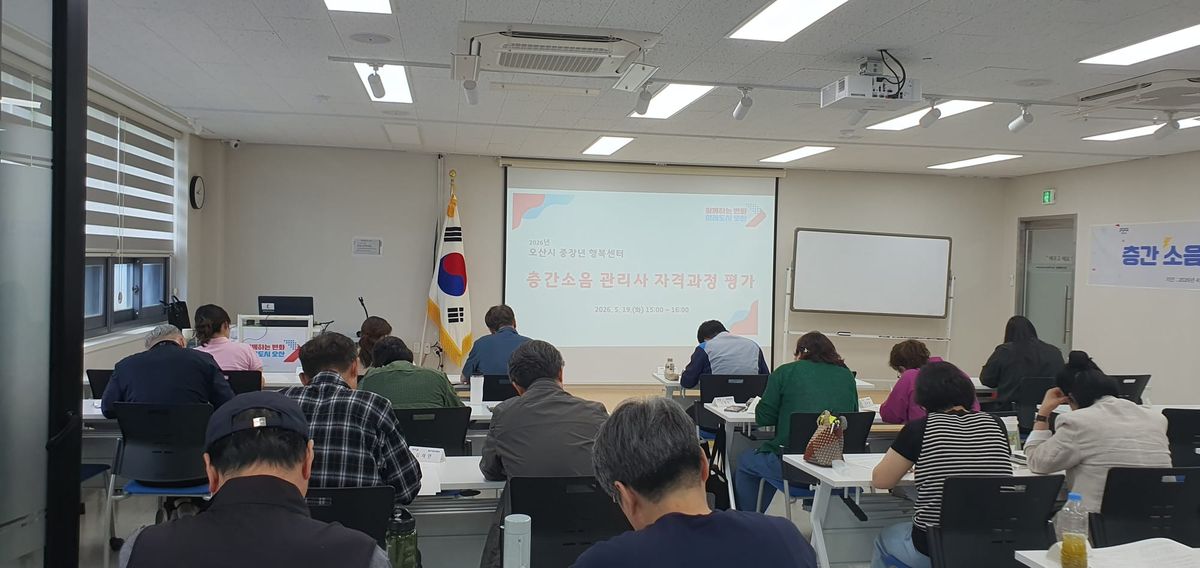
Case 1: How a Committee Helped Resolve Late-Night Child-Running Noise
When an apartment receives a neighbor-noise complaint, the practical challenge is often not understanding that there is a problem.
It is knowing what to do next.
Who should the committee meet first?
Should the upstairs household be contacted immediately?
Should noise measurements come before mediation?
And what should the committee actually say to avoid making the conflict worse?
This first article in our “Learning from Real Apartment Noise Resolution Cases” series looks at a common situation: repeated child-running noise late at night.
The case illustrates an important principle of apartment noise management:
Successful mediation often begins by turning a general complaint into one specific, realistic request.
Note: This case has been anonymized and reconstructed from recurring situations encountered in apartment noise consultation and field practice. Details have been modified to protect privacy.
The Case: “The Running Starts Every Night Around 10 PM”
A resident contacted the apartment management office about repeated noise from the unit above.
The complaint was straightforward:
“I think a child upstairs is running around. It gets particularly bad after 10 PM. I have tolerated it for months, but now it is affecting my sleep.”
The management office initially contacted the upstairs household and asked them to be more careful.
The household agreed.
A few days later, however, another complaint arrived.
“Nothing has changed.”
This is where many apartment noise cases begin to deteriorate.
The management office can call the upstairs household again and say:
“We received another complaint about your noise.”
But repeating the same warning does not necessarily solve the problem.
It can actually increase frustration on both sides.
At this point, the Apartment Noise Management Committee became involved.
Step 1: Identify What the Complainant Actually Wants
The committee did not begin with a noise measurement.
It began with a conversation.
The committee asked:
- When did the problem begin?
- What kind of noise is being heard?
- At what time is it most disturbing?
- Does it happen every day?
- Has the resident contacted the upstairs household directly?
- What change would make the biggest difference?
The final question proved especially important:
“What is the one thing you most want to change?”
The resident's answer was more specific than the original complaint.
“I am not asking them to be silent all day. I just want the running to stop after 10 PM.”
That changed the nature of the case.
The complaint was no longer simply:
“The upstairs family is too noisy.”
It had become:
“Please reduce running after 10 PM so that we can sleep.”
At the Housing Culture Improvement Research Institute (HCRI), we consider this the complainant's highest-priority request.
Identifying that request can be one of the most important steps in practical noise mediation.
Step 2: Communicate the Request, Not an Accusation
The committee then contacted the upstairs household.
The language used at this stage matters.
Imagine the committee saying:
“The resident downstairs says your child is making too much noise.”
The immediate response may be defensive:
“Our child doesn't run that much.”
“How do you know the noise is coming from our apartment?”
“Other apartments make noise too.”
The conversation quickly becomes a debate over blame.
Instead, the committee communicated the specific request:
“The resident downstairs is not asking your family to remain quiet throughout the day. Their main concern is running noise after 10 PM because it is interfering with sleep. Would it be possible to pay particular attention during that time?”
The request was specific, limited, and actionable.
The upstairs household responded that they could make an effort to prevent the child from running late at night.
That was the first meaningful change in the case.
Step 3: Do Not Close the Case After One Visit
One common weakness in apartment noise management is treating the initial contact as the end of the process.
The committee contacts the other household.
The message is delivered.
The case is marked as handled.
But one essential question remains unanswered:
Did anything actually change?
Several days later, the committee contacted the complainant again.
They asked:
“Has there been any change since our last visit?”
The response was encouraging:
“The noise hasn't disappeared completely, but the late-night running has definitely decreased.”
This distinction matters.
The committee did not ask only whether the noise had disappeared completely.
In multifamily housing, eliminating every sound generated by ordinary residential activity may be unrealistic.
A more useful question is:
Has the specific behavior that was driving the conflict improved enough to make daily life manageable?
In this case, the answer was yes.
Step 4: Aim for a Workable Improvement, Not Absolute Silence
The upstairs household did not become completely silent.
The complainant could still occasionally hear the child moving around during the daytime.
But the behavior causing the greatest distress—running after 10 PM—was significantly reduced.
The downstairs resident considered the change acceptable.
This is an important lesson for Apartment Noise Management Committees.
The committee is not a court.
Its primary function is not to declare:
“This household is the offender, and that household is the victim.”
In many cases, its more useful role is to:
Identify the core problem, translate it into a realistic behavioral request, and find an adjustment that both households can live with.
Why Did This Case Improve?
Three elements were particularly important.
1. The committee identified the highest-priority request
The original complaint—
“The upstairs apartment is too noisy.”
—was too broad.
The committee converted it into:
“Please reduce running after 10 PM.”
A specific request is easier to understand and easier to act on.
2. The committee communicated a request instead of assigning blame
The upstairs household was not immediately labeled as a “noise offender.”
Instead, the committee explained what was causing the greatest difficulty and what behavioral change was being requested.
This reduced the likelihood of a defensive confrontation.
3. The committee followed up
The process did not end after speaking to the upstairs household.
The committee returned to the complainant and checked whether the situation had actually changed.
This created a simple but important mediation sequence:
Complainant → Other household → Complainant again
Follow-up is part of the intervention, not an optional extra.
The Management Office and the Committee Have Different Roles
Another lesson from this case is the importance of separating responsibilities.
Apartment management staff do not necessarily need to personally mediate every neighbor-noise dispute.
The management office can first organize essential information such as:
- Duration of the complaint
- Main times when the noise occurs
- Type of noise
- Suspected source or location
- Previous direct contact between households
- The complainant's highest-priority request
Cases requiring field mediation can then be referred to a trained Apartment Noise Management Committee.
A practical division of responsibilities can therefore be:
Management Office: complaint intake, documentation, basic fact organization, and referral
Noise Management Committee: consultation, field investigation, mediation, follow-up, and case management
This helps prevent complaints from becoming a series of repetitive warning calls with no structured resolution process.
Early Intervention Matters
This particular case was still at a stage where practical mediation could produce meaningful improvement.
Based on HCRI's field experience, the first six months after a recurring apartment noise complaint begins can be an especially important period for active intervention.
This is not a statutory deadline or a universal scientific rule.
It is a practical case-management principle developed from field experience.
As disputes continue, the problem can gradually change.
What began as:
“I keep hearing running upstairs.”
may become:
“They know it bothers me, but they keep doing it intentionally.”
The other household may begin thinking:
“No matter what we do, they keep complaining.”
The dispute can then develop from a noise problem into a cycle of:
Noise → Distrust → Anger → Retaliation → Repeated complaints
Once a dispute has continued for a year or longer, reducing the sound alone may no longer be enough to restore the relationship.
Long-term cases often require a different approach focused on preventing further escalation and managing the conflict over time.
Why HCRI Emphasizes Practical Field Training
Understanding decibels and legal noise standards is useful.
But committee members face very different questions when they stand outside a resident's front door.
Who should be interviewed first?
How should the first conversation begin?
How much of the complainant's account should be treated as established fact?
How should the request be communicated to the other household?
When should the committee follow up?
When should direct mediation stop and professional assistance begin?
These decisions can strongly influence whether a dispute improves or becomes more hostile.
The Housing Culture Improvement Research Institute (HCRI) therefore emphasizes practical training for Apartment Noise Management Committees, including complaint consultation, field investigation, resident communication, conflict mediation, case documentation, and follow-up management.
The objective is not to turn every committee member into an acoustics specialist.
It is to give committee members enough practical preparation to intervene without unintentionally escalating the conflict.
Final Takeaway: The Committee Changed More Than the Noise
The central lesson from this case can be summarized simply:
The turning point came when “Please be quiet” became “Please reduce running after 10 PM.”
That is one of the most practical functions of an Apartment Noise Management Committee.
Rather than rushing to decide who is right or wrong, the committee can identify what is causing the greatest distress and what realistic behavioral change could reduce it.
Then it needs to follow up.
A structured process looks like this:
Complaint received → Complainant consultation → Highest-priority request identified → Other household consultation → Follow-up with complainant → Continued management
When this process is consistently applied, an Apartment Noise Management Committee can become more than a committee that exists only on paper.
It can become a practical mechanism for reducing residential conflict before it becomes a long-term dispute.