Construction Noise Compensation Standards — How Is Compensation Actually Calculated? Based on Official Environmental Dispute Resolution Committee Data
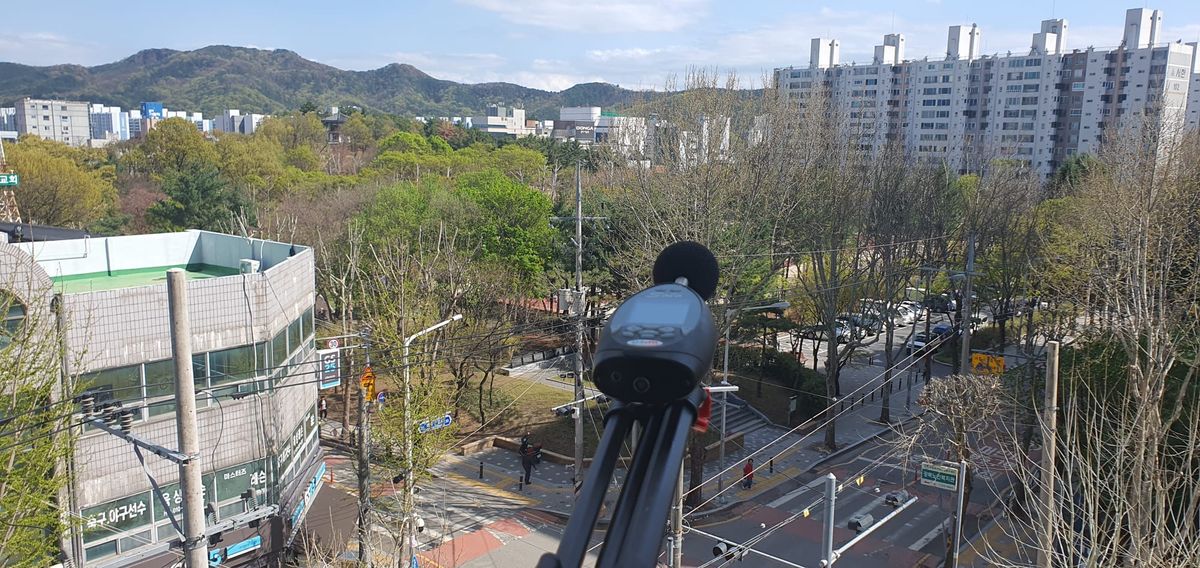
Many residents suffering from construction noise say the same thing:
“Can this really be recognized as damage?”
Sleepless nights.
Constant vibration.
Children waking up from sudden drilling sounds.
Windows shaking every morning.
But according to Korea’s Central Environmental Dispute Resolution Committee under the Ministry of Environment, there are actual compensation standards for construction noise damage.
This article summarizes the official standards based on real government materials.
1. Residential Noise Damage Standards
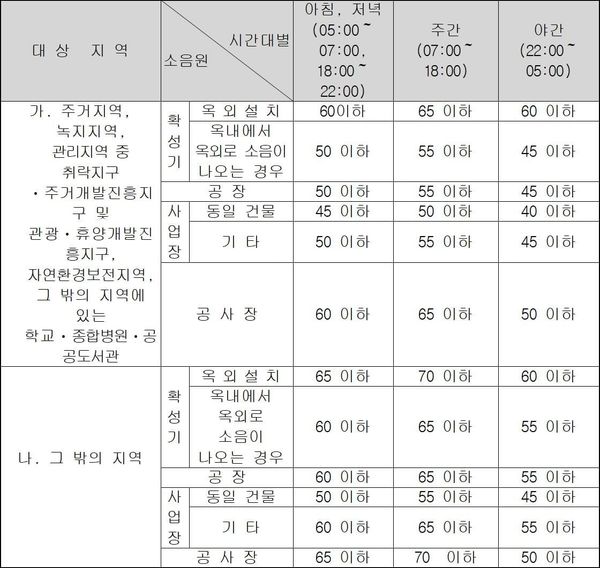
The official document classifies construction noise as follows:
| Noise Source | Evaluation Method | Tolerable Limit Standard |
|---|---|---|
| Construction site (machinery/equipment) | Leq, 5min | 65dB(A) |
| Construction blasting | Lmax | 75dB(A) |
| Factory/industrial area (daytime) | Leq, 5min | Residential area: 55dB(A) |
| Factory/industrial area (nighttime) | Leq, 5min | Residential area: 45dB(A) |
Source: Central Environmental Dispute Resolution Committee
2. Daytime and Nighttime Standards
The material clearly separates daytime and nighttime.
- Daytime: 06:00–22:00
- Nighttime: 22:00–06:00
Nighttime standards are stricter because they are directly related to sleep disturbance and mental stress.
3. Hospitals and Schools Can Receive Stronger Protection
The official standard also states that:
- hospitals,
- nursing homes,
- schools,
- childcare facilities
may receive an additional protection adjustment.
👉 The tolerable noise standard may be reduced by 5dB(A).
This means noise near sensitive facilities may be judged more strictly.
4. Compensation Amount Table
The actual compensation amount depends on:
- excess noise level,
- damage duration,
- repetition,
- severity of impact.
Example Compensation Table
| Damage Period | 6–10dB Excess | 11–15dB Excess | 16–20dB Excess |
|---|---|---|---|
| Within 1 month | 205 KRW | 290 KRW | 410 KRW |
| Within 3 months | 515 KRW | 730 KRW | 1,020 KRW |
| Within 6 months | 755 KRW | 1,070 KRW | 1,500 KRW |
| Within 1 year | 970 KRW | 1,370 KRW | 1,940 KRW |
| Within 1 year 6 months | 1,096 KRW | 1,550 KRW | 2,190 KRW |
| Within 3 years | 1,310 KRW | 1,850 KRW | 2,615 KRW |
5. Less Than 7 Days of Damage
The document also explains:
👉 If the damage period is less than 7 days,
only 60% of the daily compensation amount is applied.
6. How Excess Noise Is Calculated
The official formula is:
Excess Noise Level = Measured Noise Level − Tolerable Standard
In other words:
The key issue is how much the measured noise exceeds the legal standard.
7. What the Government Actually Considers
The committee does not judge cases simply because someone says:
“It’s noisy.”
Instead, they evaluate:
- duration of damage,
- repeated occurrence,
- actual measured levels,
- degree of life disturbance,
- regional characteristics,
- social tolerance standards.
About the Housing Culture Improvement Institute
The Housing Culture Improvement Institute organizes and shares information related to:
- construction noise,
- floor impact noise,
- vibration,
- low-frequency noise,
- resident dispute cases.
NS Point Community
Residents can participate through:
- comments,
- real-life case sharing,
- information exchange.