How Do Contractors Calculate Compensation for Construction-Site Damage?
How do contractors determine compensation for apartments affected by nearby construction? Learn how distance, noise exposure, impact duration, and environmental dispute cases can help define compensation.
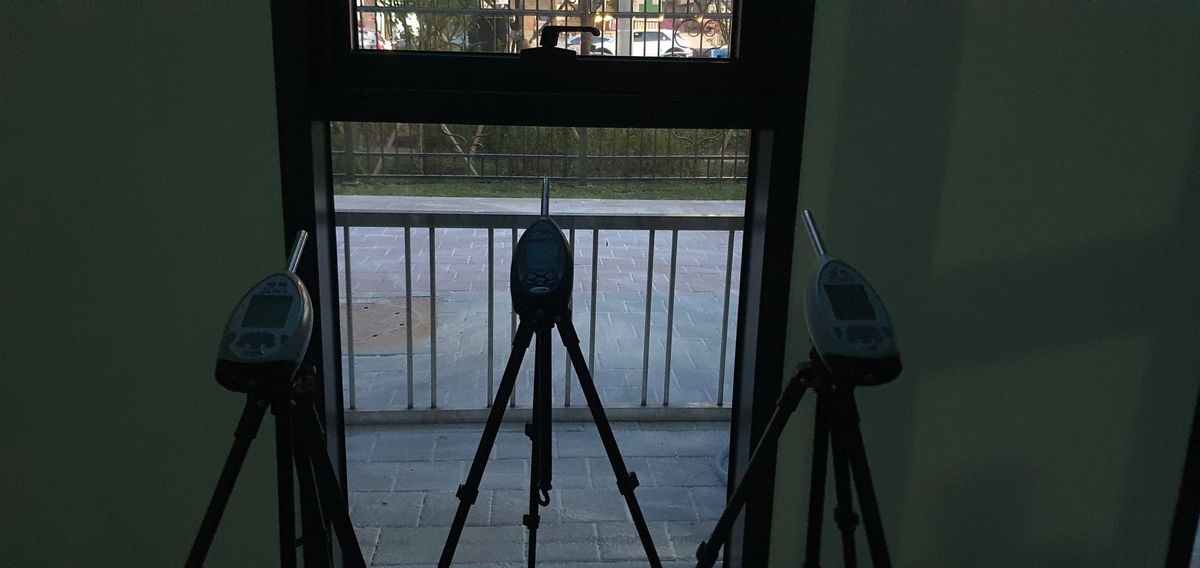
Understanding Environmental Dispute Cases, Distance, Noise Exposure, and Compensation
When major construction takes place near an apartment complex, residents may experience prolonged noise, vibration, dust, and other environmental impacts.
Once compensation discussions begin, one question usually comes first:
“How is the compensation amount actually calculated?”
Environmental dispute authorities have accumulated numerous cases involving construction-related environmental damage. These cases typically consider factors such as assessed noise levels, distance from the construction site, duration of exposure, construction activities, and building location.
But what about the contractor?
Unlike a formal environmental dispute decision, a direct compensation agreement between a contractor and residents does not necessarily follow one legally fixed formula.
Still, contractors need an objective basis for determining who should be included in the affected area and how compensation levels should be differentiated.
One useful benchmark is previous environmental dispute cases.
And among the factors used to define the potential impact area, one of the most important is often distance from the construction site.
1. How Is Compensation Assessed in Environmental Dispute Cases?
Construction noise compensation is not normally determined by one noise measurement alone.
Environmental dispute cases may consider several factors together, including:
- Assessed noise level
- Distance between the construction site and affected property
- Duration of the impact
- Actual period of residence
- Construction equipment and work phases
- Location and configuration of apartment buildings
- Comparable environmental dispute decisions
The real question is therefore not simply:
“How many decibels were recorded?”
It is closer to:
“Where was the resident located, how much construction noise were they exposed to, and for how long?”
This distinction becomes particularly important in large apartment complexes.
2. Why Can Compensation Differ Within the Same Apartment Complex?
Imagine three apartment buildings near a construction site.
Building A is closest to the construction site and directly faces the work area.
Building B is farther away and is partially shielded by another building.
Building C is located much farther from the construction site.
Although all three buildings belong to the same apartment complex, their actual exposure to construction noise may be very different.
Environmental dispute cases can distinguish affected residents based on factors such as distance, building configuration, assessed noise exposure, and duration of impact.
This means that the relevant question is not simply:
“Is this apartment complex located near the construction site?”
A more useful question is:
“How much construction impact was each building or group of residents likely to receive?”
3. Why Is Distance So Important to Contractors?
Before calculating a compensation amount, a contractor needs to address a more fundamental issue:
How far does the affected area extend from the construction site?
This is where separation distance becomes important.
In general, the influence of a particular construction noise source decreases as the distance from that source increases, although actual exposure depends on many site-specific conditions.
A building immediately adjacent to heavy construction cannot automatically be treated the same as another building located much farther away.
For contractors, distance can therefore provide an initial framework for defining the potential impact zone.
This does not mean that distance alone determines compensation.
Instead, it helps answer the first question:
“Which buildings should be examined as potentially affected properties?”
4. Using Environmental Dispute Cases to Estimate an Impact Distance
This is one of the most useful ways to connect formal environmental dispute decisions with direct contractor-resident negotiations.
A substantial body of construction-related environmental dispute cases already exists.
When examining a comparable case, several conditions should be reviewed:
Distance between the construction site and affected buildings
Major construction equipment and work phases
Assessed noise levels
Extent of the area where damage was recognized
Duration of recognized impact
These conditions can then be compared with the current construction project.
A simplified process looks like this:
Find comparable environmental dispute cases
↓
Analyze the distance and recognized impact area
↓
Measure the distance between the current construction site and each apartment building
↓
Compare construction methods, equipment, noise barriers, and building configuration
↓
Estimate the potential impact zone
↓
Develop a basis for compensation negotiations
In other words, instead of allowing the contractor to define the affected area arbitrarily, previous environmental dispute cases can provide an objective benchmark for discussing the potential impact distance.
5. Is There a Fixed Distance for Construction Damage?
No single distance should be applied automatically to every construction project.
For example, it would be misleading to say:
“Every apartment within 50 meters is entitled to compensation.”
It would be equally problematic to assume:
“Anything beyond 100 meters cannot be affected.”
Construction sites vary significantly.
A demolition project involving heavy breakers is different from a project using lower-noise equipment.
The number and operating duration of machines matter.
Noise barriers can change exposure.
Terrain and surrounding structures matter.
One apartment building may directly face the construction site, while another at a similar distance may be partially shielded by other buildings.
Therefore, the key is not simply to copy a distance from a previous case.
The better approach is to examine the conditions under which damage was recognized at a particular distance and compare those conditions with the current construction site.
For this reason, “impact distance” is better understood as a practical assessment concept, not a universal statutory boundary.
6. After Distance Comes Assessed Noise Exposure
Distance is important, but it does not determine compensation by itself.
Ultimately, the question is how much construction noise may reach a particular location.
This is why distance should be considered together with assessed noise exposure.
Two apartment buildings located at similar distances may experience different conditions.
One may be protected by another building or an effective noise barrier.
The other may directly face heavy equipment with no meaningful shielding.
A practical assessment therefore moves from:
Distance → Site conditions → Estimated or assessed noise exposure
rather than using distance alone.
This also explains why compensation may differ between buildings within the same apartment complex.
7. The Entire Construction Period Is Not Necessarily the Damage Period
Another major factor is duration.
Suppose a construction project lasts 30 months.
That does not necessarily mean that residents experienced the same level of noise for all 30 months.
Construction consists of different phases.
Demolition, excavation, earthwork, breaking, and certain foundation operations can produce substantial noise and vibration.
Some interior or finishing work may have much less impact on neighboring apartments.
Environmental dispute assessments can therefore distinguish between the total construction period and the period during which significant environmental impact actually occurred.
If contractors use comparable environmental dispute cases as a benchmark, the relevant question becomes:
“For how long did the construction activities capable of causing significant impact continue?”
That period can have a substantial influence on compensation.
8. A Practical Framework for Contractor Compensation
If a contractor uses environmental dispute cases as a reference point, the compensation assessment can be understood in the following sequence.
Step 1. Find comparable environmental dispute cases
Identify cases involving similar construction methods, equipment, and surrounding residential conditions.
Step 2. Determine the distance to each apartment building
Map the relationship between the construction site and potentially affected buildings.
Step 3. Examine the impact distance in comparable cases
Review at what distances and under what conditions damage was recognized.
Step 4. Adjust for current site conditions
Consider construction equipment, noise barriers, terrain, shielding, and building orientation.
Step 5. Define potential impact zones
Use distance and estimated or assessed noise exposure to differentiate affected areas.
Step 6. Determine the relevant impact period
Identify the construction phases during which significant noise or vibration was likely to occur.
Step 7. Compare compensation levels in similar cases
Use comparable dispute decisions as a benchmark rather than simply copying the compensation amount.
Step 8. Negotiate the final compensation framework
The contractor and residents can then discuss the scope and level of compensation using a more objective basis.
The overall structure can be summarized as:
Comparable environmental dispute cases → Distance → Assessed noise exposure → Impact area → Impact duration → Compensation level
This should not be interpreted as a legally mandated formula that every contractor must use.
Rather, it is a practical way of using established environmental dispute cases as an objective benchmark for voluntary compensation negotiations.
9. Contractors Also Need an Objective Compensation Standard
Using objective criteria is not only important for residents.
Contractors need them as well.
Imagine a 1,000-unit apartment complex located near a major construction project.
Should all 1,000 units receive identical compensation?
Should compensation apply only to the buildings closest to the site?
Should different buildings receive different amounts?
A contractor needs a defensible basis for answering these questions.
Simply stating,
“Compensation will only be provided up to this building,”
may be difficult for residents to accept if there is no supporting rationale.
However, if the proposed impact area is based on comparable environmental dispute cases, separation distance, assessed noise exposure, building configuration, and impact duration, the basis for negotiation becomes easier to explain.
Environmental dispute decisions can therefore serve two purposes:
They can support residents' claims, but they can also help contractors justify how the compensation area is defined.
10. How HCRI Applies These Principles to Construction Damage Cases
There is a considerable amount of information available from previous environmental dispute cases.
However, finding a case and applying it correctly to a current construction site are two different tasks.
The Housing Culture Improvement Research Institute (HCRI) specializes in consulting on residential environmental impacts associated with construction projects, including noise, vibration, dust, and compensation disputes.
Rather than beginning with the question,
“How much compensation should each household demand?”
HCRI first examines the relationship between the construction site and the surrounding residential properties.
This may include reviewing:
- Distance between the construction site and individual apartment buildings
- Direct exposure or shielding between the site and residences
- Major construction phases and equipment
- Potential noise and vibration impact
- Comparable environmental dispute cases
- Likely impact zones and impact periods
Comparable dispute cases can then be used to develop a more objective framework for estimating the potential affected area and discussing compensation.
Where appropriate, HCRI also supports resident meetings, consultations with contractors, construction-impact mitigation discussions, and compensation negotiations.
The objective is not simply to demand the highest possible amount.
The goal is to connect established environmental dispute cases with actual site conditions and develop a compensation framework that can be reasonably explained to both residents and contractors.
Final Thoughts: Determine the Impact Area Before the Compensation Amount
When people hear “construction damage compensation,” the first question is usually:
“How much compensation can each household receive?”
But another question should come first:
“How far from the construction site does the relevant impact extend?”
This is why separation distance is so important.
By examining the distance, assessed noise exposure, impact duration, and construction conditions found in comparable environmental dispute cases, it becomes possible to develop a more objective framework for evaluating the current project.
Only then does it make sense to discuss compensation levels.
The basic concept can be summarized as:
Use comparable environmental dispute cases to assess the likely impact distance, then apply the current site's distance, noise exposure, and impact duration to develop a reasonable compensation framework.
The Housing Culture Improvement Research Institute (HCRI) applies this approach when reviewing construction-related noise, vibration, dust, impact mitigation, contractor negotiations, and residential compensation issues.
Construction compensation should not begin simply as a negotiation over a number.
First define the affected area objectively. Then establish a reasonable compensation standard for that area.