Apartment Noise Management Committees: A 5-Step Field Investigation Process
Apartment noise disputes have a critical early intervention period. Learn HCRI's five-step field investigation process and why long-term cases require continued management, trained committee members, and expert support.
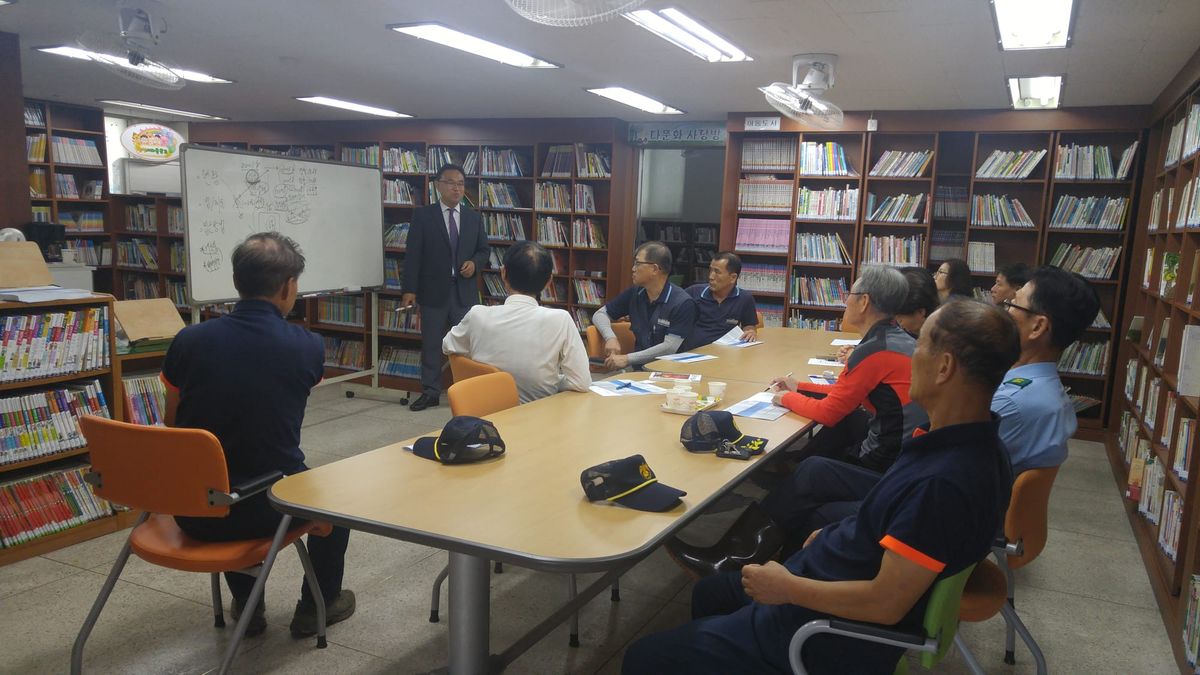
Why the First Six Months Matter in Resolving Neighbor Noise Conflicts
Inter-floor noise disputes in apartment buildings often begin with a relatively simple complaint:
“I keep hearing footsteps from upstairs.”
But when the problem continues for months, it can develop into something much more difficult.
Residents may stop seeing it as a noise problem and begin seeing it as a personal conflict.
This is why the Apartment Noise Management Committee should not simply visit the home, identify the suspected source, and leave.
Timing, listening, communication, follow-up, and long-term management all matter.
Based on HCRI’s field experience, the first six months after a complaint begins can be considered a practical “golden time” for intervention.
This is not a statutory or scientific deadline. It is a field-based management principle used by the Housing Culture Improvement Research Institute (HCRI).
Once a dispute continues for more than a year, the focus may need to shift from simply solving the noise problem to managing an established interpersonal conflict.
Step 1. Understand the complaint before visiting the site
The first question should not be:
“How many decibels was the noise?”
A better first question is:
“How long has this conflict been going on?”
The apartment management office should collect basic information before the Noise Management Committee begins its field investigation.
Important questions include:
- When did the noise problem begin?
- What time does it usually occur?
- What type of sound is causing the most distress?
- Where does the resident believe the sound is coming from?
- Has the resident already contacted the other household?
- Have there been arguments, police reports, or repeated complaints?
- What does the complainant want most right now?
The final question is especially important.
One resident may want complete silence.
Another may simply want running or jumping to stop after 10 p.m.
Someone else may want an apology or acknowledgment.
This is the resident's highest-priority request, and it should be clearly identified before mediation begins.
Step 2. Visit the complainant first—and listen
Whenever possible, the first household visited should be the complainant.
The purpose of this first visit is not to determine who is right or wrong.
It is to listen and understand.
Committee members should avoid immediately saying:
“We first need to prove that the noise is actually coming from upstairs.”
or:
“We need a noise measurement before we can do anything.”
A resident who has already been distressed for several months may interpret these statements as disbelief.
Instead, the committee should begin by listening.
For example:
“If this has been happening repeatedly at that time of night, I can understand why it has been difficult for you.”
This does not mean accepting every allegation as fact.
It means acknowledging that the resident may genuinely be experiencing serious discomfort.
Before leaving, the committee should confirm the resident's most important request once again.
“Of all the issues you have described, what would you most like to see improved first?”
That answer becomes the basis for the next step.
Step 3. Do not accuse the other household—communicate the request
The next step is usually a visit to the household identified as the possible noise source.
This is one of the most sensitive stages.
Opening the conversation with:
“The downstairs resident says your family is too noisy.”
can immediately create defensiveness.
Instead, the committee should communicate the complainant's specific request.
For example:
“The downstairs household is particularly struggling with running sounds after 10 p.m. Their main request is not for complete silence throughout the day, but for greater care during late-night hours.”
This changes the nature of the conversation.
The committee is not there to declare someone guilty.
Its role is to identify a realistic point of adjustment between two households.
That distinction can significantly affect whether the conversation becomes cooperative or confrontational.
Step 4. Return to the complainant and check what changed
One of the most common weaknesses in apartment noise mediation is ending the process after a single visit to the suspected noise-source household.
That is not enough.
After an appropriate period, the committee should contact or revisit the complainant and ask:
“Has anything changed since our last visit?”
The goal should not necessarily be complete silence.
The committee should determine whether the frequency has decreased, whether the most problematic time period has improved, and whether the other household appears to be making an effort.
A basic field investigation therefore follows a simple sequence:
Complainant → Other household → Complainant again
The final follow-up is essential because apartment noise disputes are rarely resolved by a single conversation.
Step 5. After six months, prepare for continued management
This is where the role of the Noise Management Committee becomes more demanding.
In HCRI’s field experience, the first six months can be an important period for active intervention.
During the early stages, practical changes—such as reducing running at night, adjusting furniture use, or changing certain household habits—may still improve the situation.
As the conflict continues, however, emotions begin to accumulate.
After a year or more, the dispute may no longer be primarily about footsteps, impacts, or furniture noise.
The complainant may begin to believe:
“They are doing it deliberately.”
The other household may think:
“No matter what we do, they will keep complaining.”
At this point, the nature of the case has changed.
The goal may need to shift from:
“How do we eliminate this noise?”
to:
“How do we prevent this conflict from becoming even worse?”
Long-term cases require trained field investigators
When resentment between two households has become deeply established, the person visiting the site matters.
A poorly chosen sentence can make the situation worse.
Committee members should avoid:
- Taking one resident's claims and presenting them to the other household as established facts
- Deciding too quickly who is responsible
- Pressuring both sides to reconcile
- Identifying the source of noise without sufficient evidence
- Making promises that the committee cannot keep
For long-running and emotionally intense cases, committee members should receive an appropriate level of training in listening, conflict communication, field procedures, and escalation management.
Knowing when not to intervene further is also a professional skill.
Some cases should be referred to a qualified expert rather than repeatedly handled by untrained committee members.
Apartment noise disputes can become a “battlefield”
For residents who have experienced repeated noise for months or years, the problem can affect sleep, daily routines, family relationships, and their perception of their own home.
At the same time, the household identified as the source may feel that their family is constantly being treated as the offender.
The Apartment Noise Management Committee enters directly between these two sides.
In that sense, a severely escalated noise dispute can resemble a battlefield of accumulated emotions.
The committee should not enter that environment unprepared.
Its first objective does not have to be dramatic.
Do not make the conflict worse.
Then work toward improvement.
Committee members need to understand the complainant thoroughly, remain emotionally neutral, document the process, seek expert assistance when necessary, and continue monitoring the case.
The 5-Step Field Investigation Process
The practical sequence can be summarized as follows:
1. Identify the complaint period, noise characteristics, and highest-priority request
2. Visit the complainant first and listen carefully
3. Visit the other household and communicate specific requests without accusation
4. Return to the complainant and check whether conditions have changed
5. For long-term disputes, shift toward continued management and expert support
The time dimension is equally important:
Early-stage complaint → Focus on resolution
Around the first six months → Active mediation is especially important
One year or longer → Consider conflict management and continued monitoring
These periods should not be interpreted as legal deadlines or universal scientific thresholds. They reflect HCRI’s practical approach based on field experience with apartment noise disputes.
Why ongoing management matters
Apartment noise complaints should not disappear from the management system simply because the committee has visited both households once.
Some cases require repeated follow-up.
The committee may need to record:
- Changes in the complainant's main request
- Changes in the frequency or timing of reported noise
- Actions taken by the other household
- Previous conversations and agreements
- Escalation in emotional conflict
- Whether expert assistance is needed
This is why a consultation log and case-management record can be valuable.
Without continuity, every new complaint starts from the beginning.
With proper records, the committee can understand how the dispute has developed and decide what should happen next.
HCRI: Training Committees for Real-World Conflict
The Housing Culture Improvement Research Institute (HCRI) emphasizes that Apartment Noise Management Committees need more than knowledge of noise standards and decibel levels.
Committee members need to know:
Who should be visited first?
What should be said during the first conversation?
What should never be said?
How should the complainant's highest-priority request be communicated?
When should the committee stop direct mediation and seek expert support?
HCRI provides practical education and consulting focused on apartment noise complaints, field investigation, resident communication, conflict mediation, and committee operation.
The objective is not to turn every committee member into a professional acoustician.
It is to help committee members enter difficult situations prepared enough to avoid worsening the conflict and capable enough to recognize when professional assistance is required.
Final Thoughts: A Good Field Investigation Does Not Begin With a Sound Meter
Apartment noise disputes often begin with sound.
But if they continue for too long, they can become disputes about trust, resentment, and relationships between neighbors.
That is why early intervention matters.
Listen to the complainant.
Identify the highest-priority request.
Communicate that request carefully to the other household.
Return and check what has changed.
And if the conflict has already become deeply established, do not assume that one more visit will solve it.
Entering the field is not the difficult part. Entering prepared—and leaving without making the conflict worse—is what matters.
For an Apartment Noise Management Committee, successful intervention is not measured only by how many cases are “closed.”
Sometimes success means resolving a problem early.
Sometimes it means preventing a one-year conflict from becoming a three-year conflict.
And sometimes it means recognizing that the case now requires continued management and professional support.