Why Are Construction Working Hours Not Clearly Fixed? Why local government recommendations alone are not enough to protect nearby residents
Why are construction working hours not fixed nationwide in South Korea? This article examines local government guidelines, early-morning dump trucks, weekend work, resident consultation, and why preventive management is needed before complaints occur.
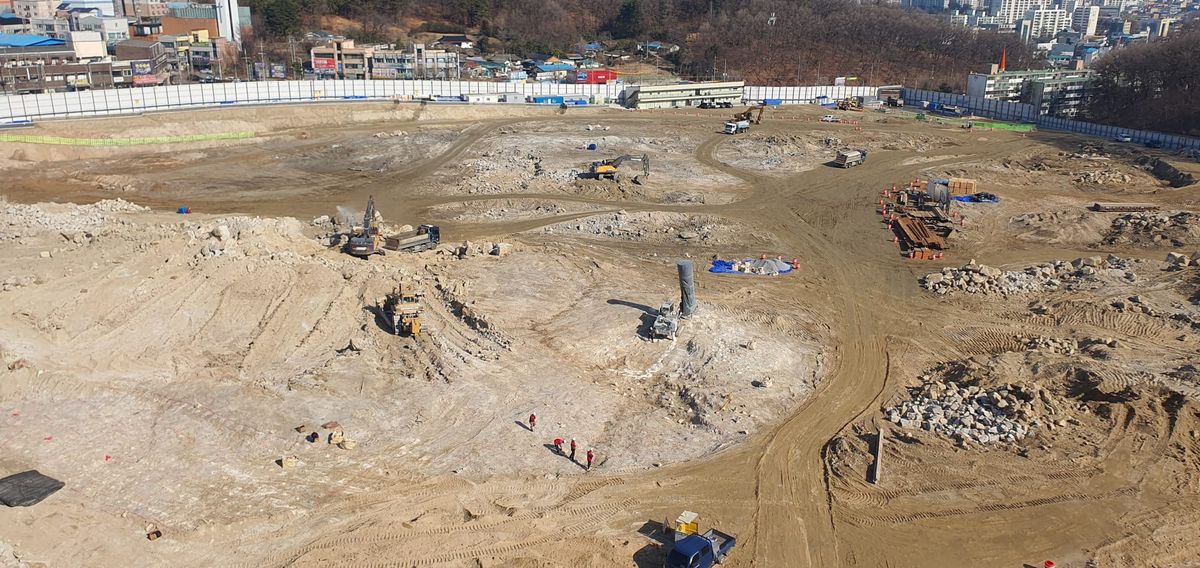
People living next to construction sites often ask the same question:
“What hours are construction sites actually allowed to operate?”
When dump trucks begin arriving before sunrise and heavy equipment starts operating early in the morning, residents naturally assume that there must be legally fixed construction hours.
In reality, however, the issue is more complicated.
South Korea has regulatory standards for construction noise and vibration, but there is no single nationwide rule that simply requires every construction site to start and stop work at exactly the same time.
Local governments may establish recommended working hours or reach agreements with contractors depending on local conditions. In practice, however, such arrangements may function more as guidelines or administrative recommendations than absolute working-hour prohibitions.
This creates a recurring conflict between residents and construction companies.
Why do residents want construction to begin after 8 a.m.?
When a construction site is located immediately next to an apartment complex or residential neighborhood, the daily lives of nearby residents should be considered.
One practical approach would be to encourage major construction activities to take place, where feasible, between approximately 8 a.m. and 5 p.m. on weekdays.
On Saturdays, lower-noise work could be prioritized.
On Sundays and substitute public holidays, construction could be suspended or minimized to protect residents' rest.
This does not mean that these exact hours are a mandatory nationwide legal standard for every construction project.
The important point is that local governments should actively manage working hours at construction sites located close to residential areas, rather than waiting until complaints become severe.
Even more importantly, residents and contractors should discuss working hours before major construction begins.
The bigger problem: action often comes only after complaints
This is one of the most frustrating issues for residents.
If local authorities, contractors, and resident representatives discuss construction hours, noisy work, and truck movements before construction begins, many disputes can potentially be prevented.
But the process often works in the opposite direction:
Construction begins → Residents suffer → Complaints increase → Authorities intervene → Contractor takes corrective action
Local governments may be concerned that placing too many restrictions on construction could delay the project.
From a resident's perspective, however, this means something very different.
Residents may first lose sleep.
They may experience noise and dust.
They may be exposed to exhaust fumes from construction vehicles.
Only after these problems become serious and residents submit complaints does the issue receive greater attention.
That is reactive complaint management rather than preventive management.
Construction may start in the morning, but resident exposure can begin at 5 a.m.
Construction working hours should not be discussed without considering construction vehicle waiting times.
Large construction projects require dump trucks, ready-mix concrete trucks, material delivery vehicles, and other heavy vehicles.
To be ready when the site opens, some trucks may arrive in the surrounding area long before actual construction work begins.
Suppose the official workday starts in the morning, but dump trucks begin waiting near nearby apartments at around 5 a.m.
For residents, the impact may already have started.
Large diesel vehicles can generate engine noise.
There may be vehicle movement, doors opening and closing, and other intermittent sounds.
If engines are left idling, exhaust fumes can become another source of discomfort.
During warmer months, when residents sleep with their windows open, early-morning truck noise and exhaust can be particularly disruptive.
Yet a contractor may argue:
“Construction itself has not started yet.”
That distinction offers little comfort to residents.
If the vehicles are there because of the construction project, their arrival, waiting, and idling should also be considered part of construction-related impact management.
Construction hours and truck hours should be managed together
Imagine that residents and a contractor agree that major work will take place from 8 a.m. to 5 p.m.
If dump trucks begin lining up outside the apartment complex at 5 a.m., the agreement has limited value from the residents' perspective.
Working-hour agreements should therefore consider more than the operation of machinery inside the site.
They should include:
Construction working hours → Heavy vehicle entry times → Vehicle waiting areas → Idling management → Resident traffic and pedestrian safety
This is especially important when the construction entrance is close to an apartment entrance.
Large trucks entering the site during the morning commuting and school period can create not only noise but also a traffic safety risk.
Weekends and public holidays need a different approach
The impact of construction noise is not experienced equally throughout the week.
On weekdays, many residents leave home for work or school.
On weekends, more people remain at home and expect to rest.
The same construction activity may therefore cause a much stronger reaction on a Saturday or Sunday.
For construction sites near residential areas, it is reasonable to consider prioritizing lower-noise work on Saturdays and minimizing or suspending work on Sundays and substitute public holidays where site conditions permit.
If work is unavoidable, residents should at least be informed in advance about the type of work and expected working hours.
Unexpected construction often causes more anger than expected construction
One important lesson from construction complaints is that residents' reactions are not determined only by the number of decibels.
Uncertainty also matters.
Residents become frustrated when they do not know:
- When today's work will finish
- Whether construction will continue over the weekend
- Whether trucks will arrive before sunrise
- Whether concrete pouring will continue into the evening
- Whether particularly noisy work is scheduled for the next day
Advance notice cannot eliminate construction noise.
But it gives residents an opportunity to prepare.
For example, when late concrete work is unavoidable, the contractor can send advance written notice to the apartment complex.
The management office or resident representatives can then post the information in elevators, community notice boards, or other communication channels.
In construction noise management, advance notice can be almost as important as the working hours themselves.
Residents and contractors should meet before major construction begins
The best time to discuss construction hours is not after a serious dispute has already developed.
It is before major construction activity begins.
Resident representatives and the contractor can discuss practical issues such as:
- Weekday working hours
- Lower-noise work on Saturdays
- Sunday and public holiday work
- Advance notification of nighttime work
- Concrete pouring schedules
- Dump truck and concrete truck entry times
- Truck waiting areas
- Noise and dust mitigation measures
- Pedestrian and resident vehicle safety
Important agreements should preferably be documented rather than left as verbal promises.
Written records also help maintain continuity when construction site managers or resident representatives change.
Local governments should move beyond “we will act when there is a complaint”
Contractors alone cannot solve the problem.
Local governments also have an important role.
A complaint-driven system typically looks like this:
Construction → Resident exposure → Complaint → Site inspection → Corrective request
The problem is that residents must first experience the damage before administrative action begins.
A more preventive approach would look like this:
Pre-construction review → Resident-contractor consultation → Working-hour and vehicle management → Noise and dust mitigation → Advance resident notification → Construction → Immediate correction when problems occur
This shifts the focus from responding to complaints to preventing avoidable impacts.
The absence of complaints does not necessarily mean that there is no harm.
Some elderly residents, families with young children, or other affected households may experience significant inconvenience without repeatedly filing formal complaints.
Local government oversight should therefore not depend entirely on the number of complaints received.
Reactive enforcement does little to change contractor behavior
There is another reason preventive oversight matters.
If authorities ask contractors to improve conditions only after complaints are filed, contractors may gradually learn a simple pattern:
“If residents complain, we respond.”
A complaint comes in, working hours are adjusted temporarily.
Another complaint comes in, additional dust suppression is introduced.
Residents protest again, and an explanation is provided.
This approach may resolve individual complaints, but it does little to improve the contractor's underlying approach to residential impact management.
If local authorities review working hours, heavy vehicle movements, dust control, and resident notification from the beginning of a project, contractors are more likely to recognize that:
Protecting the surrounding residential environment is part of construction management itself.
That change in mindset is important.
“Legally permitted” does not mean “no one is being harmed”
In construction disputes, residents often hear:
“There is no legal problem.”
But legal compliance and the absence of residential impact are not the same thing.
Residents do not live according to construction schedules.
They sleep at night.
They prepare children for school in the morning.
Older residents may remain at home throughout the day.
Families expect to rest on weekends.
Construction management should therefore go beyond the narrow question of whether a specific legal threshold has been exceeded.
It should also consider how construction affects the actual daily lives of surrounding residents.
Why HCRI emphasizes early consultation
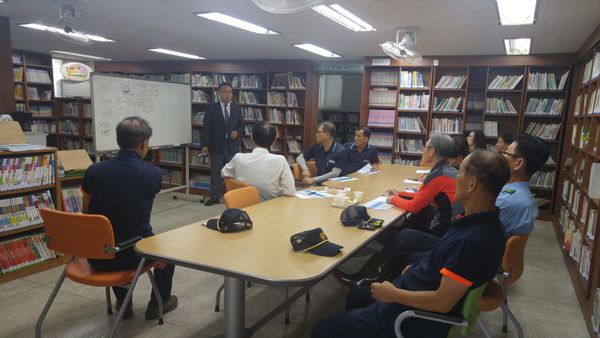
The Housing Culture Improvement Research Institute (HCRI) places particular importance on early communication between residents and construction companies when dealing with construction noise, vibration, dust, and compensation disputes.
When the first serious meeting occurs only after residents have suffered for several months, both sides may already distrust each other.
Residents may ask:
“Why did no one listen to us earlier?”
The contractor may respond:
“Why wasn't this formally raised earlier?”
At that point, even reasonable mitigation measures become more difficult to negotiate.
HCRI therefore emphasizes establishing a communication structure early in the construction process.
Working hours, nighttime construction, heavy vehicle movements, dust control, advance notices, and resident safety can all be addressed before complaints escalate.
HCRI provides field-oriented consulting for apartment communities affected by construction noise, vibration, dust, and related compensation issues, helping resident representatives and construction companies identify practical measures for reducing impacts and managing longer-term disputes.
Construction damage compensation should not begin only when residents start discussing money.
How the site managed residential impacts from the early stages of construction can also become an important part of the overall process.
Final Thoughts: The real issue is not just working hours—it is preventive management
The fact that there is no single nationwide start-and-stop time for every construction site should not be the end of the discussion.
For projects close to residential communities, working hours should reflect the daily lives of nearby residents.
Lower-noise work should be considered on Saturdays.
Sunday and substitute public holiday work should be minimized where possible.
Early-morning dump trucks and other heavy construction vehicles should also be included in site management.
Most importantly, these issues should not be discussed only after complaints become severe.
Residents, contractors, and local authorities should establish practical working arrangements before major construction begins.
The best construction complaint policy is not simply to respond quickly after residents complain. It is to reduce the reasons for complaints before they become serious.
The construction industry needs to move from:
“Manage the site when complaints arrive”
to:
“Manage residential impacts before complaints occur.”
That approach can protect residents while also helping contractors reduce repeated complaints and unnecessary construction delays.