Apartment Noise Rules: How Residents Can Create Their Own Community Agreement
Every apartment community has different noise concerns. Explore real noise agreements from two South Korean apartment complexes and learn how resident surveys, household distribution, and management committees can turn shared guidelines into practical noise prevention.

Real Examples from Two Apartment Complexes in South Korea
What time should residents stop using washing machines?
Should children avoid running indoors after a certain hour?
How should apartment communities handle noise from pets?
These are common questions in apartment living.
However, not every apartment complex has the same noise problems.
Some communities have many families with young children. Others have more elderly residents or different daily routines.
That is why apartment noise rules should reflect the needs of each community.
One practical solution is a Resident-Led Apartment Noise Agreement.
This article introduces real agreements from two apartment complexes in South Korea and explains how residents can create their own community noise rules.
1. Real Examples: Two Apartment Complexes, Different Noise Rules
Apartment Complex A and Apartment Complex B established different guidelines for everyday household noise.
Here is a comparison of their actual agreements.
| Noise Category | Apartment Complex A | Apartment Complex B |
|---|---|---|
| Laundry and cleaning | Monday–Saturday, 10 a.m.–8 p.m. | Monday–Saturday, 8 a.m.–8 p.m. |
| Exercise and household noise | No use of noise-producing exercise equipment from 10 p.m.–7 a.m. | Avoid heavy footsteps, slamming doors, and children running from 7 p.m.–6 a.m. |
| Showering and drainage | Minimize use from 10 p.m.–8 a.m. | Minimize use from 10 p.m.–6 a.m. |
| Pet-related noise | Minimize after 7 p.m. | Minimize after 5 p.m. |
| Community announcements | At least once a week | At least once a week |
Apartment Complex B also included musical instruments and audio equipment within its household activity schedule.
The differences are clear.
Apartment Complex A set 10 a.m. as the starting time for noisy household chores, while Apartment Complex B allowed them from 8 a.m.
The recommended quiet hours for pet-related noise were also different.
These examples show why apartment communities may need different noise agreements.
These are examples of community-established guidelines, not nationwide legal quiet hours. Essential activities such as showering should be addressed through reasonable consideration rather than treated as automatically prohibited.
2. Why Do Apartment Communities Need Their Own Noise Agreements?
When an apartment noise complaint occurs, neighbors may have different expectations.
A downstairs resident might say:
“It should be quiet at night.”
An upstairs resident might respond:
“Some noise is unavoidable during normal daily life.”
Without shared expectations, these differences can easily turn into conflict.
A community noise agreement helps establish a common understanding of acceptable behavior.
It can help residents:
- Understand the community's recommended quiet hours.
- Recognize which everyday activities may disturb neighbors.
- Discuss complaints using shared guidelines rather than personal demands.
- Reduce unnecessary disagreements.
The most important principle is that residents should participate in creating the rules rather than simply receiving instructions from building management.
3. How to Create an Apartment Noise Agreement in 3 Steps
Step 1. Survey Residents About Their Noise Concerns
Before drafting an agreement, the community should identify its most common noise problems.
A simple resident survey can ask:
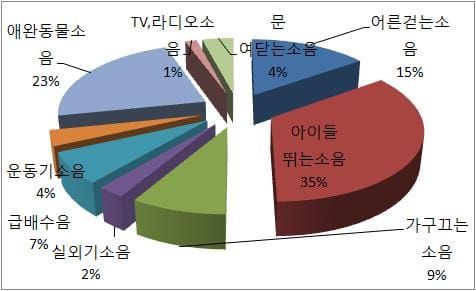
Question 1: Which type of apartment noise bothers you most?
- Children running or jumping
- Heavy footsteps or furniture dragging
- Washing machines and vacuum cleaners
- Pet-related noise
- Musical instruments or loud audio equipment
Question 2: During which hours is quiet most important to you?
Question 3: What household noise rules would you be willing to follow?
The responses help identify both the problems residents experience and the rules they consider realistic.
An effective agreement should be based on residents' actual living conditions, not simply copied from another apartment complex.
Step 2. Write the Agreement and Distribute It to Every Household
After reviewing the survey results, the community can prepare a short, practical agreement.
A one-page document is often easier to read and follow than a long list of restrictions.
Here is an example.
Sample Resident-Led Apartment Noise Agreement
We agree to respect our neighbors and reduce unnecessary household noise.
- Avoid running, jumping, and heavy footsteps during agreed quiet hours.
- Use washing machines and vacuum cleaners during the community's recommended hours whenever practical.
- Avoid dragging furniture or slamming doors late at night.
- Take reasonable steps to reduce repeated pet-related noise.
- Report noise concerns through the agreed community procedure rather than confronting neighbors directly.
Specific hours and guidelines should be determined through resident consultation.
Once finalized, the agreement should be distributed to every household.
The community can also reinforce the guidelines through noticeboards, newsletters, building announcements, and resident meetings.
A noise agreement cannot be effective if residents do not know it exists.
Step 3. Use the Agreement in Noise Complaint Mediation
The agreement should become a practical reference for the community's Apartment Noise Management Committee.
For example, suppose a resident complains about washing machine noise late at night.
Instead of simply telling the upstairs household to stop, the committee can explain:
“Our residents agreed to recommend using washing machines before 8 p.m. whenever possible. We encourage everyone to follow this shared guideline.”
This changes the conversation.
The issue is no longer presented solely as one resident making demands of another.
Instead, both households can refer to a community agreement developed with resident participation.
The committee can also encourage residents to follow the agreed complaint procedure and avoid direct confrontation.
However, a voluntary agreement does not automatically create legal penalties or establish liability whenever a guideline is not followed.
4. Why Apartment Noise Management Committees Should Use These Agreements
Apartment Noise Management Committees need practical standards when handling complaints.
A resident-led agreement provides a common reference for discussions.
The committee can use it to:
- Explain agreed household noise guidelines.
- Encourage specific behavioral changes.
- Help residents discuss concerns more constructively.
- Review whether existing rules still reflect the community's needs.
For example, if residents repeatedly complain about a particular activity, the committee can review the problem and recommend another resident survey.
A community noise agreement should not be a document that is written once and forgotten.
It should remain a practical guide that residents understand, use, and improve.
5. HCRI's Approach: Prevention Before Conflict
The Housing Culture Improvement Research Institute (HCRI) emphasizes that apartment noise management should not begin only after serious disputes occur.
Prevention is equally important.
Because apartment communities have different household structures, daily routines, and noise concerns, a single set of rules may not work equally well everywhere.
HCRI therefore emphasizes a practical process:
Resident Survey → Community Noise Agreement → Distribution to Every Household → Committee-Based Implementation
This approach helps connect everyday noise prevention with the work of Apartment Noise Management Committees.
The goal is not to eliminate every sound from apartment living.
It is to encourage realistic behavioral changes and reduce avoidable conflicts between neighbors.
Conclusion: Better Apartment Living Starts With Shared Rules
Apartment noise agreements should not be identical everywhere.
The real examples from Apartment Complexes A and B show that even basic guidelines for laundry, household activities, and pets can differ.
What matters is how the agreement is created and used.
Three principles are especially important:
1. Ask residents what rules their community needs.
2. Distribute the completed agreement to every household.
3. Use the agreement as a shared reference for residents and the Apartment Noise Management Committee.
An apartment noise agreement should not be about controlling neighbors. It should be about helping residents live together with greater understanding and consideration.
A quieter apartment community begins with rules that residents help create—and are willing to follow.