Construction Noise Can Be Unavoidable, But Resident Complaints Can Be Prevented
Large concrete pours often create heavy construction noise, truck traffic, and nighttime work near apartment buildings. Learn why early communication between contractors
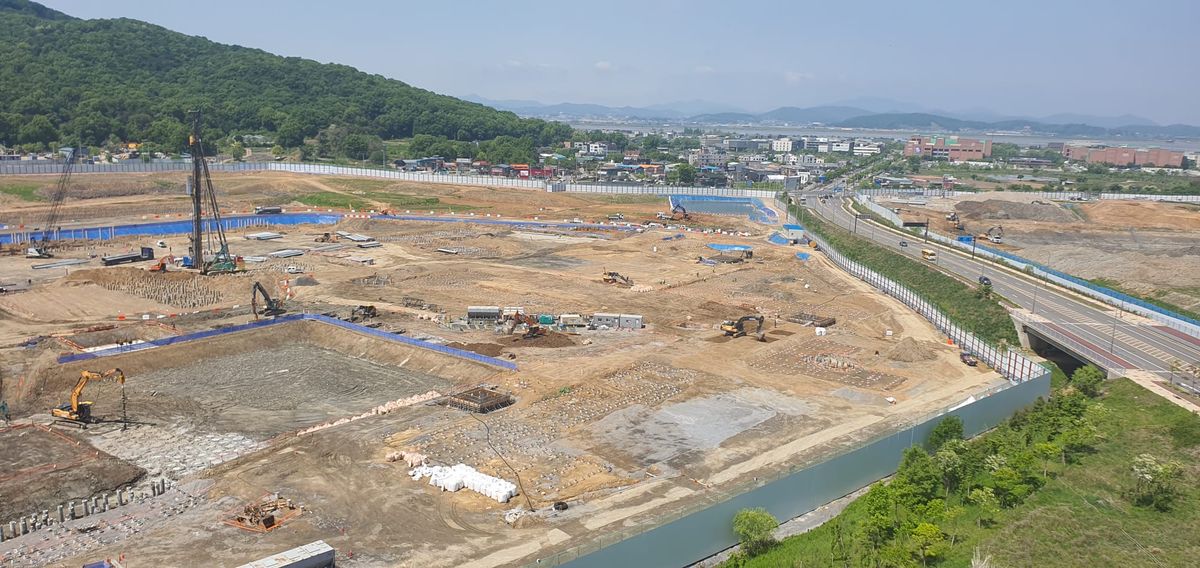
Why Communication Before Concrete Pouring Matters
Large-scale concrete pouring is one of the noisiest stages of any construction project.
Residents often experience long lines of ready-mix concrete trucks, continuous reversing alarms, concrete pumps operating for hours, and construction work that extends late into the evening.
Many ask the same question.
"Why can't the contractor simply continue tomorrow?"
The answer lies in the nature of concrete itself.
Why Concrete Pouring Sometimes Continues at Night
Concrete begins curing as soon as it leaves the batching plant.
Once it starts hardening, it cannot be stored for later use.
This means contractors must complete an entire concrete pour without interruption.
Another important factor is transportation.
Most ready-mix concrete trucks are independently operated.
Drivers earn more income by completing additional deliveries, so contractors often schedule dozens of trucks to arrive within a limited time.
The result is a sudden increase in:
- truck traffic
- reversing alarms
- concrete pump noise
- low-frequency vibration
- nighttime construction activity
Unfortunately, these operations often continue after local government offices have closed, leaving residents unsure where to report excessive nighttime disturbances.
The Biggest Problem Is Often Not the Noise
After more than 25 years of investigating residential environmental disputes, the Housing Culture Research Institute has observed something interesting.
Residents are often more frustrated by unexpected construction activity than by the construction itself.
When heavy work begins without notice, people feel ignored.
Parents cannot prepare children for bedtime.
Residents cannot adjust work schedules.
Drivers are surprised by heavy truck traffic near apartment entrances.
The absence of communication increases frustration.
A Practical Solution: Notify Residents Before Construction Begins
One of the most effective solutions requires no expensive technology.
Before major concrete pouring or nighttime construction, contractors should officially notify apartment management.
The notice should include:
- construction date
- expected working hours
- possibility of nighttime work
- estimated completion time
- concrete truck schedule
- traffic restrictions around the apartment
Apartment management can then inform residents through:
- bulletin boards
- elevators
- resident mobile applications
- text messages
- community websites
Simply knowing what will happen reduces anxiety and unnecessary complaints.
Construction Schedules Must Be Respected
Notification alone is not enough.
The promised working hours should be respected whenever possible.
If delays occur, contractors should immediately inform apartment management so residents receive updated information.
When communication remains transparent, trust between contractors and residents improves significantly.
Resident Safety Is Equally Important
Concrete trucks are large vehicles operating in residential neighborhoods.
Residents should be informed in advance about:
- truck entry routes
- peak delivery times
- pedestrian safety
- children's walking routes
- temporary traffic changes
Safety information is just as important as noise information.
Practical Note from the Housing Culture Research Institute
Construction noise cannot always be eliminated.
However, many complaints can be reduced through early communication, realistic scheduling, and mutual trust.
Good construction management is not only about building structures.
It is also about protecting the quality of life of nearby residents.
About Housing Culture Research Institute
The Housing Culture Research Institute (HCRI) specializes in apartment noise, construction noise, vibration analysis, environmental dispute resolution, and residential conflict management based on more than 25 years of practical field experience.