Construction Site Noise Limits in South Korea: Daytime and Nighttime Standards
How loud can construction sites be in South Korea? Learn the general daytime and nighttime noise limits near residential apartments, how measurements are assessed, and why regulatory violations do not automatically guarantee compensation.
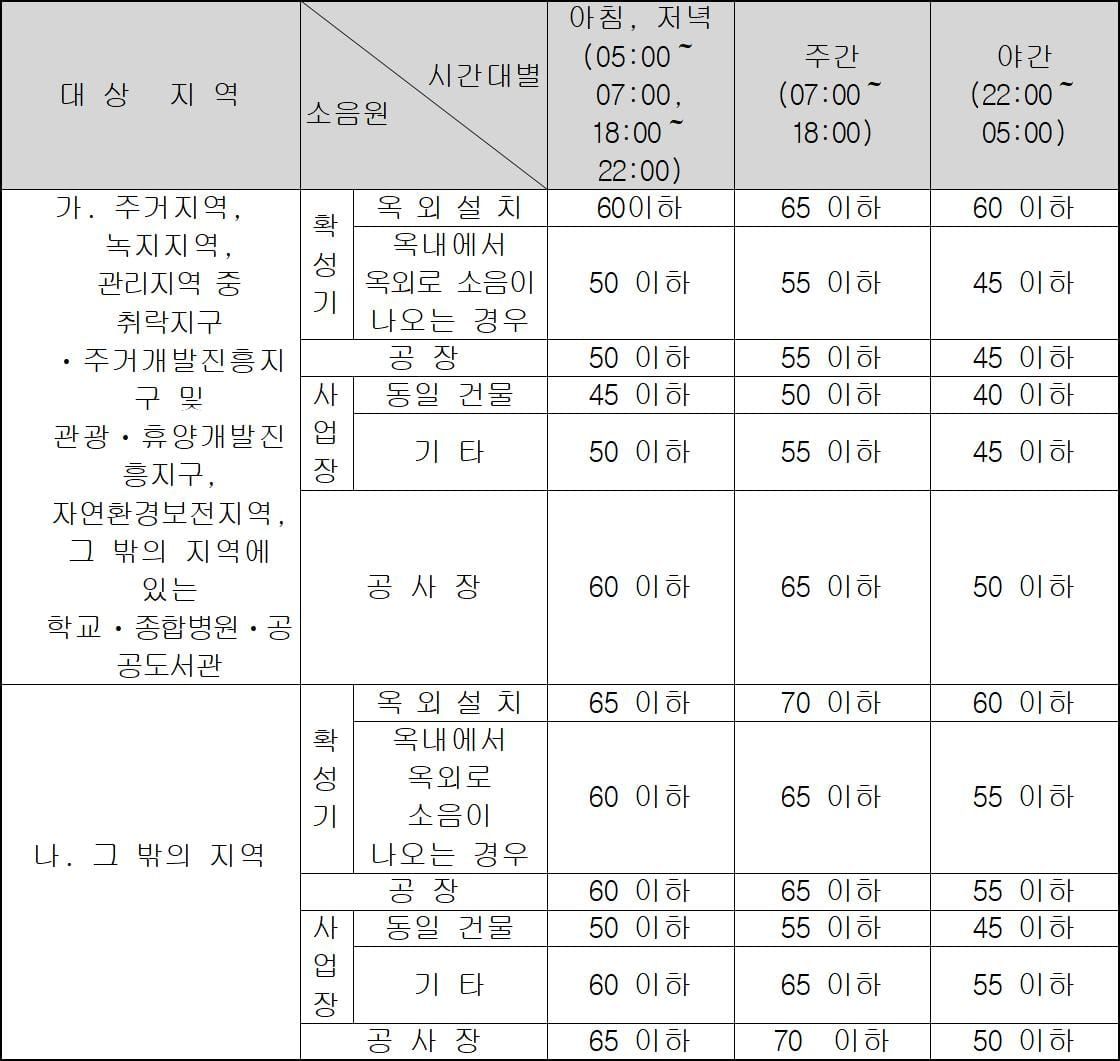
How Loud Can Construction Noise Be Near Residential Apartments?
Construction noise is one of the most common environmental complaints among residents living near building sites.
Excavators, concrete breakers, demolition equipment, and heavy machinery can generate significant noise throughout the day.
For apartment residents, this can interfere with sleep, rest, and everyday activities.
But how much construction noise is legally permitted in South Korea?
In residential areas, the general construction noise limit is 65 dB(A) during the daytime and 50 dB(A) at night.
However, the applicable limits depend on the time of day and the location.
Here is what apartment residents and construction contractors should know.
1. Construction Noise Limits by Time of Day
South Korea regulates construction noise under the Noise and Vibration Control Act and its Enforcement Rule.
The applicable standards are set out in Article 20 and Attached Table 8 of the Enforcement Rule.
For residential areas and other designated noise-sensitive locations, the general construction noise limits are:
| Time Period | Hours | Noise Limit |
|---|---|---|
| Morning | 5:00 a.m.–7:00 a.m. | 60 dB(A) |
| Daytime | 7:00 a.m.–6:00 p.m. | 65 dB(A) |
| Evening | 6:00 p.m.–10:00 p.m. | 60 dB(A) |
| Nighttime | 10:00 p.m.–5:00 a.m. | 50 dB(A) |
The key point is simple:
Construction sites near residential areas face stricter noise limits in the early morning, evening, and nighttime.
The nighttime limit is 15 dB lower than the daytime limit.
These figures represent regulatory noise limits, not a universal guarantee that construction activity is permitted at any particular hour.
2. Residential and Other Areas Have Different Limits
Construction noise regulations also depend on the area's legal classification.
The following table summarizes the general standards shown in South Korea's construction noise regulations.
| Area Classification | Morning & Evening | Daytime | Nighttime |
|---|---|---|---|
| Residential and designated noise-sensitive areas | 60 dB(A) | 65 dB(A) | 50 dB(A) |
| Other areas | 65 dB(A) | 70 dB(A) | 50 dB(A) |
The residential and noise-sensitive category includes designated residential and green zones, certain other land-use zones, and specified sensitive facilities.
The applicable standard should be determined by the legally designated area and relevant regulatory conditions, not simply by the presence of an apartment building nearby.
3. Does Construction Noise Above 65 dB Automatically Mean a Legal Violation?
This is one of the most important questions.
Suppose a resident measures construction noise at 75 dB(A) at 10 a.m.
The general daytime limit for a residential area is 65 dB(A).
Does that automatically prove a violation?
Not necessarily.
Regulatory compliance depends on whether the noise was measured using the prescribed methods and under the appropriate conditions.
Several factors may matter:
- The measurement location and conditions
- The measuring equipment and procedure
- Background noise from traffic or other sources
- Whether the measured noise can be attributed to the construction site
- Any applicable regulatory adjustments or exceptions
For example, a smartphone noise measurement may help document a resident's experience.
However, a smartphone reading alone does not necessarily establish a legally recognized exceedance of the construction noise limit.
The measurement method is just as important as the number displayed.
4. Construction Noise Limits and Damage Compensation Are Different
Another common misunderstanding is that exceeding the legal noise limit automatically entitles residents to compensation.
Regulatory noise limits and construction damage compensation serve different purposes.
Construction noise limits are used for environmental regulation and administrative enforcement.
Compensation, on the other hand, may require a broader assessment of actual exposure, damage, and supporting evidence.
Relevant factors can include:
Distance: How far is the apartment from the construction site?
Location: Does the apartment face the construction site, or is it shielded by other buildings?
Duration: How long was the resident exposed to construction noise?
Construction phase: Did the disturbance occur during demolition, excavation, foundation work, or another phase?
Evidence: What measurements, records, and supporting materials are available?
As a result:
Noise above 65 dB(A) does not automatically guarantee compensation. Noise below 65 dB(A) does not automatically eliminate every possible compensation claim.
Each case must be assessed according to its specific circumstances and the applicable legal or dispute-resolution framework.
5. What Should Apartment Residents Record?
Construction noise changes as building work progresses.
Demolition and excavation may create very different noise conditions from finishing work.
Once a particularly noisy construction phase has ended, it may be difficult to reconstruct the original conditions.
Residents should therefore keep a consistent record of:
- Date and time of the disturbance
- Type and duration of the noise
- Construction activity taking place at the time
- Location and impact experienced inside the apartment
- Supporting evidence, such as photographs, videos, measurements, and complaint records
These records can help explain the circumstances of the disturbance.
Where regulatory compliance is disputed, residents may also request assistance from the relevant local authority or seek appropriately conducted professional noise measurements.
6. HCRI's Approach to Construction Noise Damage
The Housing Culture Improvement Research Institute (HCRI) emphasizes that construction noise disputes should not be evaluated using a single decibel reading alone.
A meaningful assessment considers:
Construction Site Distance + Building Location + Construction Phase + Noise Exposure + Duration
For example, two apartments in the same complex may experience different levels of construction noise because of their distance from the site, building orientation, and surrounding structures.
The institute also emphasizes the importance of documenting noise impacts while construction is still underway.
Once a noisy construction phase is completed, obtaining evidence of the original exposure conditions may become more difficult.
Understanding both regulatory noise limits and the separate requirements for damage compensation helps residents approach construction-related disputes more effectively.
Conclusion: Three Things to Remember About Construction Noise in South Korea
1. The general daytime construction noise limit in residential areas is 65 dB(A).
2. The limits are stricter during morning and evening hours (60 dB(A)) and at night (50 dB(A)).
3. Exceeding a regulatory noise limit and qualifying for construction damage compensation are separate questions.
The most important principle is:
Construction noise should be evaluated not only by its decibel level, but also by how, when, and where it was measured—and how residents were actually affected.
Legal References
- South Korea's Noise and Vibration Control Act, Article 21
- Enforcement Rule of the Noise and Vibration Control Act, Article 20
- Attached Table 8: Standards for the Regulation of Living Noise and Vibration
This article focuses on construction-site noise limits. Vibration is subject to separate regulatory standards and is not covered by the noise tables above.
The figures presented are general standards based on the supplied Korean regulatory table. Actual compliance assessments should use the applicable official regulations and measurement procedures, including any relevant exceptions.