How to Measure Apartment Noise with a Smartphone Noise Meter App
When apartment noise continues repeatedly, many people wonder:
“How loud is this noise?”
“Can I measure it with a smartphone app?”
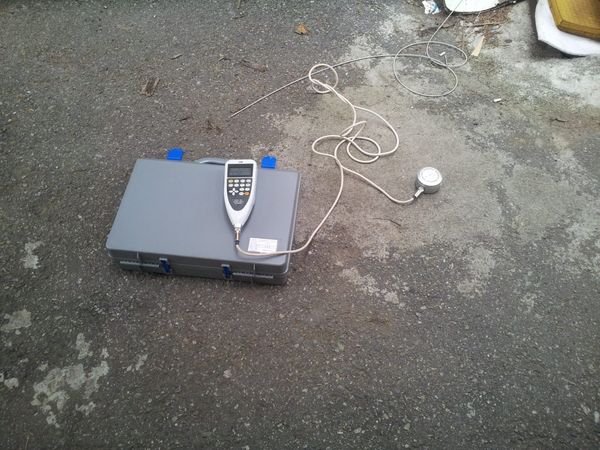
A smartphone noise meter app can help you record the approximate noise level and the time when the noise occurs. However, it is important to remember that a smartphone app is not a professional sound level meter. It should be used as a reference tool, not as official measurement data.
Still, it can be useful when organizing your situation before contacting the apartment management office, seeking consultation, or preparing for further review.
1. Smartphone Position Matters
When measuring indoor noise, choose the place where the noise is heard most clearly. If footsteps are loudest in the living room, measure in the living room. If banging sounds are mainly heard in the bedroom, measure in the bedroom.
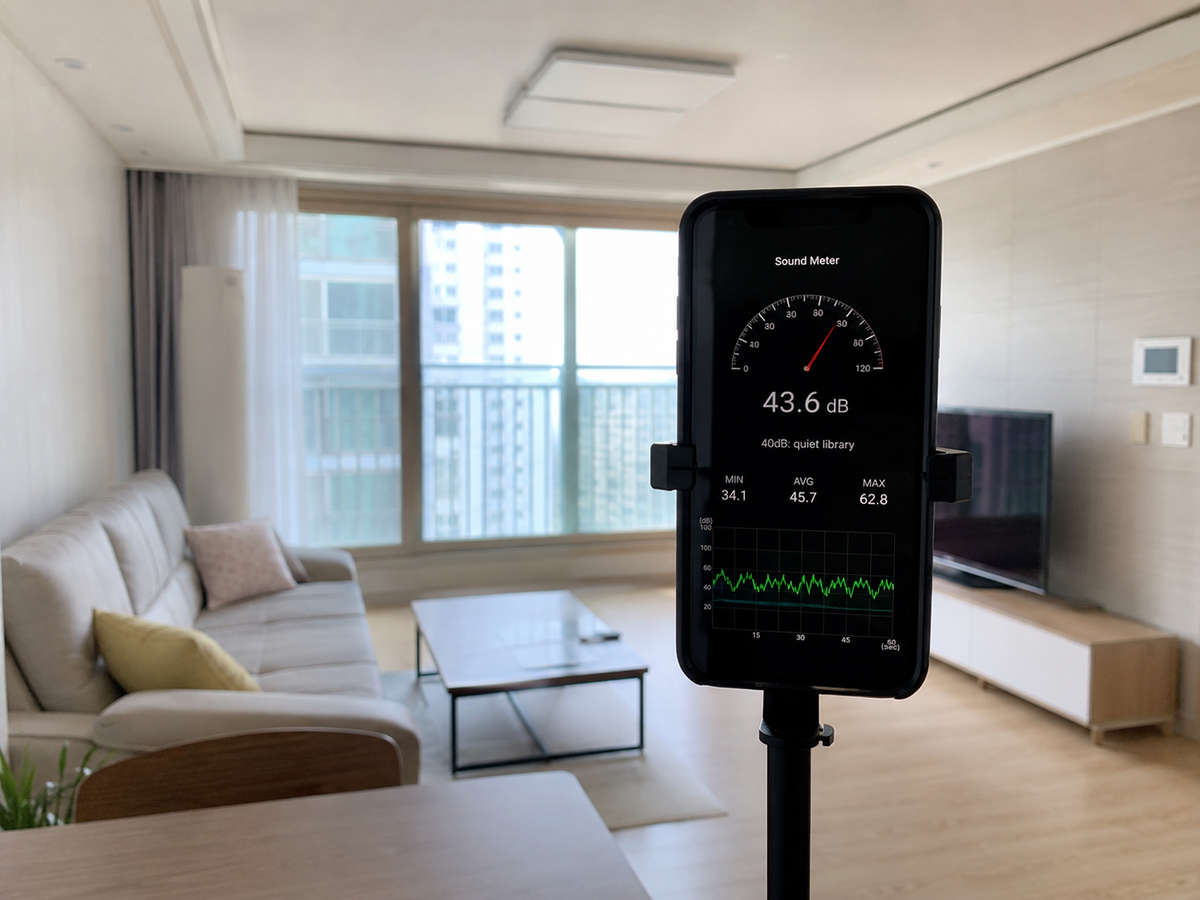
The smartphone should not be placed directly on the floor. It is better to place it at about ear height, around 1.2 to 1.5 meters from the floor. You can use a desk, shelf, or small tripod to keep the phone stable.
Avoid placing the phone too close to walls, windows, or large furniture, as reflected sound may affect the result. The best position is usually near the center of the room or close to where you actually hear the noise.
2. Things to Check Before Measuring
Make sure the phone’s microphone is not covered by your hand, phone case, blanket, curtain, or other objects. Also, try to turn off indoor noise sources such as the TV, music, washing machine, vacuum cleaner, or air purifier.
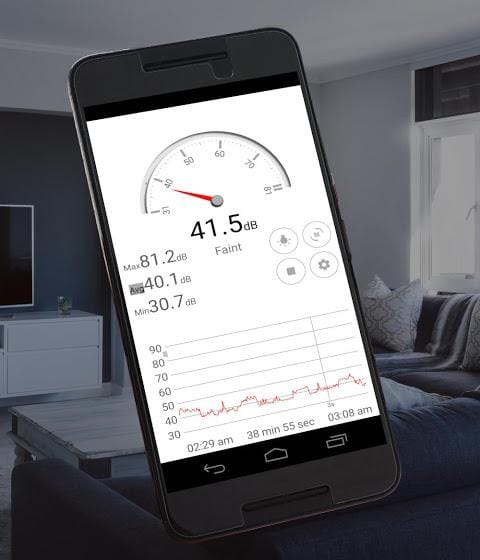
It is also helpful to measure the background noise when the room is quiet. For example, if the room is normally around 30 dB but rises repeatedly to 50 dB or higher when footsteps occur, the difference can help explain the situation more clearly.
When recording noise, write down the following information:
- Date and time
- Measurement location
- Type of noise
- Duration of the noise
- Average and maximum noise levels
- Whether windows were open or closed
- Whether there were other indoor noise sources
The most important point is not a single measurement, but repeated records. It is more helpful to show when, where, how often, and what type of noise occurred.
3. How to Record Different Types of Noise
For short and strong impact sounds, such as footsteps, running, objects being dropped, or furniture being dragged, check the maximum noise level as well as the average level.
For continuous sounds, such as TV noise, music, musical instruments, or loud conversations, record the average level and how long the sound lasted.
In short, for impact noise, focus on how high the sound level rises at the moment of impact. For continuous household noise, focus on how long the noise continues.
4. Recommended Noise Meter Apps
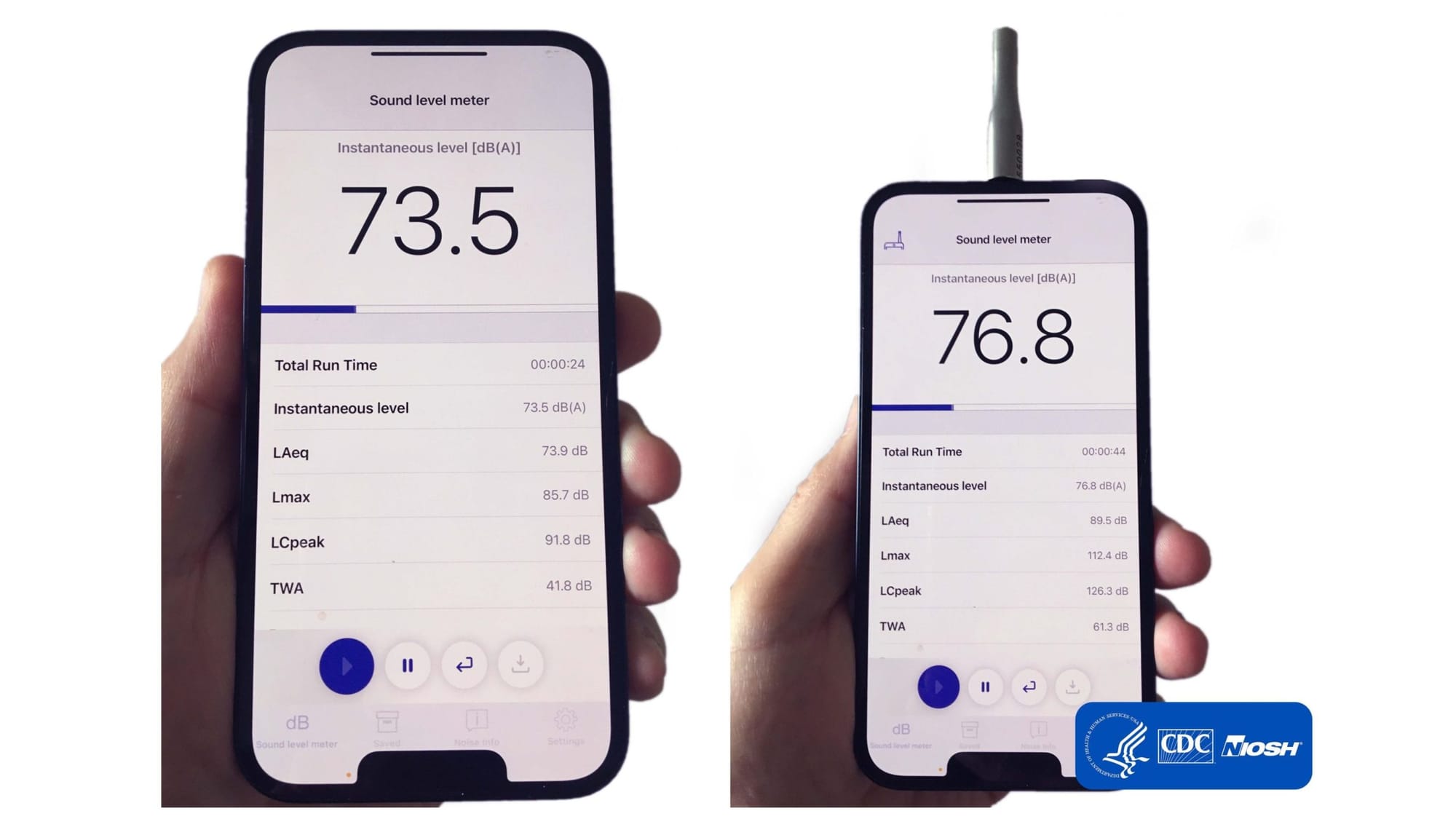
For iPhone users, NIOSH Sound Level Meter is a good option. It is free, has no ads, and allows users to check average and maximum noise levels. It is suitable for people who want a more structured way to record noise.
For both iOS and Android users, Decibel X is another useful option. It has a simple interface and allows users to check current, average, and maximum noise levels easily.
For Android users, Sound Meter apps can also be used for simple noise checks. However, since Android devices vary by manufacturer and model, microphone performance may differ. Therefore, it is better to focus on repeated measurements from the same device rather than relying on one absolute number.
Conclusion
A smartphone noise meter app cannot replace a professional sound level meter. However, it can still help you record when, where, and how often apartment noise occurs.
When measuring noise, do not hold the phone in your hand and move it around. Instead, place it in the room where the noise is loudest, at about ear height, and keep it stable.
Rather than relying on one measurement, record the date, time, location, type of noise, average level, and maximum level together.
Apartment noise problems can become more difficult when handled emotionally. A better first step is to record the situation objectively, then contact the apartment management office, seek consultation, try mediation, and consider expert review if necessary.