"It's Just Road Traffic Noise." Is That Really True? How Construction Projects Can Change the Noise Environment Around Your Home
Road Traffic Noise
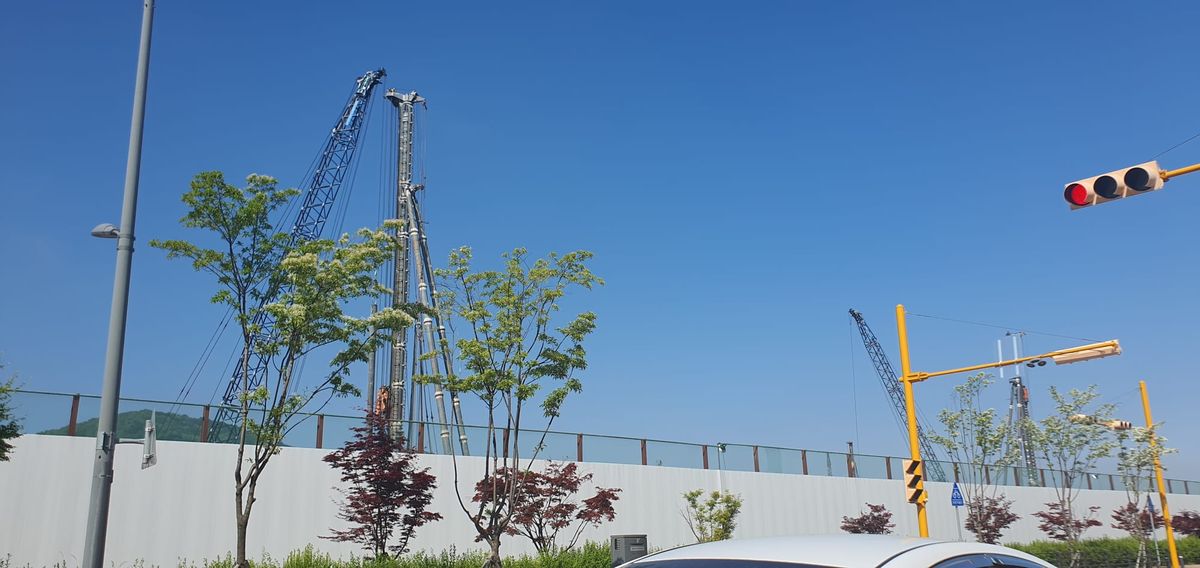
One of the most common statements residents hear from construction companies is surprisingly simple.
"The noise comes from the road, not from our construction site."
For people living near busy roads, this explanation sounds reasonable.
After all, the road existed long before construction began.
But after more than two decades of environmental dispute investigations in Korea, we have learned that this explanation is often incomplete.
The real question is not whether road traffic already existed.
The real question is:
Did the construction project change the existing acoustic environment?
This distinction is often the key factor in environmental dispute resolution and compensation.
Looking Beyond Decibel Levels
Many people believe environmental investigations begin by measuring noise levels.
In reality, experienced investigators often begin somewhere else.
They ask a different question:
"When did residents first notice a change?"
This simple question frequently provides more valuable information than a single sound measurement.
If traffic conditions remained unchanged for years but complaints began only after construction reached a certain stage, investigators need to understand why.
Why Complaints Often Increase During Structural Construction
An interesting pattern appears repeatedly in Korean construction disputes.
During excavation and earthwork, complaints from apartment buildings across the street are often limited.
However, once reinforced concrete structures begin rising above ground, complaints frequently increase.
This is not a coincidence.
Large concrete structures can alter how sound travels.
Instead of allowing traffic noise to disperse naturally, the unfinished building may reflect sound toward nearby residential buildings.
At the same time, new construction activities introduce additional sources of noise:
- reinforcing steel installation
- concrete pouring
- formwork installation and removal
- material handling
- tower crane operations
Residents are no longer hearing only road traffic.
They are experiencing a completely different acoustic environment created by multiple combined sources.
Why "Road Noise" May Not Tell the Whole Story
Construction companies often argue that nearby roads are responsible for residents' complaints.
Road traffic certainly contributes to environmental noise.
However, environmental dispute investigations focus on whether construction activities have added to or amplified the existing conditions.
A construction project may change:
- sound reflection
- sound propagation
- low-frequency vibration
- overall residential sound exposure
These changes may significantly affect nearby communities even when the road itself has not changed.
Practical Investigation Begins with Environmental Change
Professional investigations rarely focus on a single measurement.
Instead, specialists examine:
- the construction schedule
- the timing of resident complaints
- structural development of the building
- changes in the surrounding sound field
- differences before and after major construction phases
These factors often reveal whether construction has materially altered the residential environment.
Practical Notes from the Housing Culture Research Institute (Korea)
Many residents ask us,
"Can we receive compensation?"
The better question is:
"Can the additional impact of construction be objectively demonstrated?"
Environmental disputes are rarely decided by opinions alone.
Successful cases depend on explaining how construction changed the existing environment, supported by technical analysis and carefully organized evidence.
At the Housing Culture Research Institute, we assist residents by analyzing construction phases, sound transmission characteristics, reflected noise, and environmental changes to help clarify whether construction activities have contributed to residential impacts.
Proper technical analysis often strengthens the foundation for meaningful discussions regarding environmental dispute resolution and potential compensation.
Final Thoughts
Busy roads do not automatically eliminate construction responsibility.
When a construction project changes the way sound reaches nearby homes, the environmental situation itself has changed.
Understanding how that change occurred is often the first step toward resolving disputes fairly.
About the Housing Culture Research Institute (Korea)
The Housing Culture Research Institute specializes in apartment noise, construction noise, vibration, low-frequency sound, environmental dispute resolution, and residential environmental consulting throughout Korea.
Subscribe to our newsletter for professional insights, real dispute case studies, and practical guidance on residential environmental issues in Korea.