When Road Traffic and Construction Noise Overlap Five Professional Indicators Used in Environmental Dispute Investigations
When Road Traffic and Construction Noise Overlap Five Professional Indicators Used in Environmental Dispute Investigations
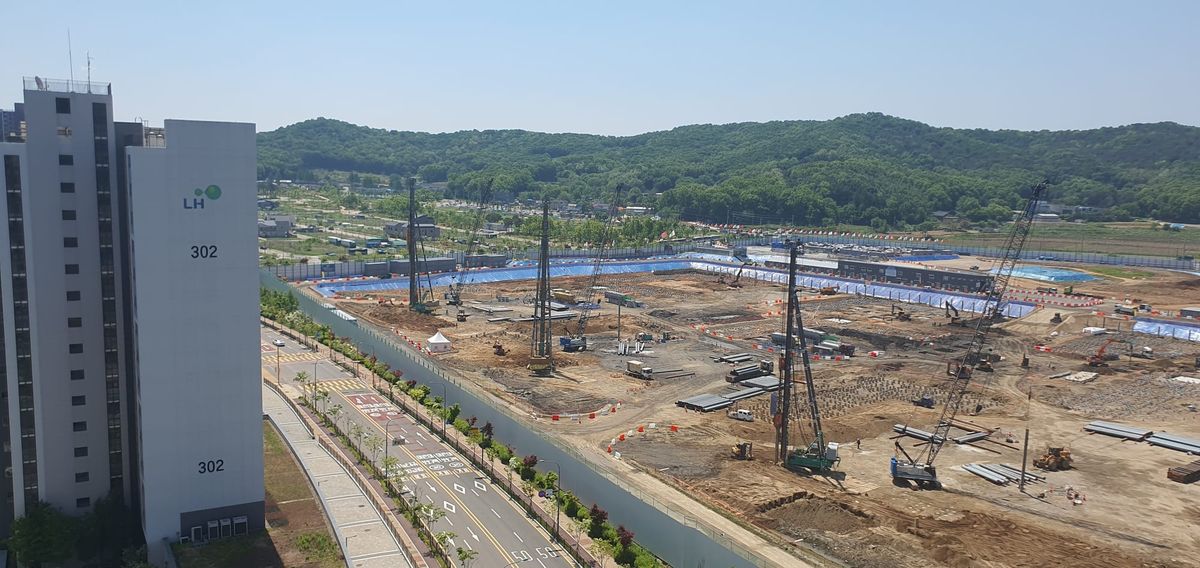
One of the most difficult situations in environmental dispute resolution occurs when a construction project is located beside a busy road.
Residents often ask:
"How can anyone prove the construction is responsible if traffic has always been here?"
This is exactly where professional investigation becomes important.
Experienced environmental specialists do not attempt to separate sounds simply by listening.
Instead, they examine how the construction project has changed the overall acoustic environment.
Indicator 1
Did complaints begin after the structural frame was built?
This is often one of the strongest indicators.
Earthwork may generate relatively few complaints from residential buildings across the road.
However, once reinforced concrete floors begin rising, complaint numbers frequently increase.
The timing itself becomes valuable evidence.
Indicator 2
Has low-frequency noise become more noticeable?
Residents often describe new sensations such as:
- "The apartment seems to vibrate."
- "The windows shake slightly."
- "I feel the sound rather than hear it."
These descriptions may indicate changes in reflected sound or additional low-frequency energy produced by construction equipment operating around large concrete structures.
Indicator 3
Has the affected floor level changed?
Road traffic typically affects lower floors more strongly.
However, reflected sound from tall buildings may increase noise exposure on middle or upper floors.
This change in vertical distribution often provides important clues regarding construction-related acoustic effects.
Indicator 4
Did conditions improve after major construction activities ended?
Another valuable observation is whether environmental conditions changed after structural work, heavy equipment operations, or formwork removal were completed.
If residents report noticeable improvement after these activities ended, investigators may examine whether construction contributed to the previous noise conditions.
Indicator 5
Has the overall sound environment changed?
Professional investigations evaluate more than individual sound sources.
They consider how traffic noise,
construction activities,
building reflections,
and low-frequency sound interact within the surrounding residential environment.
This comprehensive approach provides a much clearer understanding than simply asking whether road traffic is louder than construction equipment.
Practical Notes from the Housing Culture Research Institute (Korea)
Residents often focus immediately on compensation.
Professional investigators focus first on evidence.
The question is not:
"How loud was it?"
The question is:
"Can the construction project's additional environmental impact be objectively demonstrated?"
At the Housing Culture Research Institute, environmental investigations combine engineering analysis with practical field experience.
Construction phases, building geometry, reflected sound, low-frequency vibration, and residential observations are evaluated together to clarify the true causes of environmental impacts.
In many real dispute cases, the outcome has depended not only on the existence of noise, but on how clearly the additional construction-related effects could be explained.
Final Thoughts
Road traffic and construction noise frequently coexist.
The challenge is not identifying a single source.
The challenge is understanding whether construction activities have altered the existing residential sound environment.
That distinction often becomes the foundation for successful environmental dispute resolution.
About the Housing Culture Research Institute (Korea)
The Housing Culture Research Institute conducts research and professional consulting on construction noise, vibration, low-frequency sound, apartment living environments, and environmental dispute resolution throughout Korea.
Join our newsletter to explore real environmental dispute cases, technical analyses, and practical solutions from Korea.