Why Construction Noise Continues Even After Administrative Orders
Construction Noise Control Rock Excavation Noise Noise Barrier Urban Redevelopment Construction Site Noise Environmental Noise Noise Mitigation
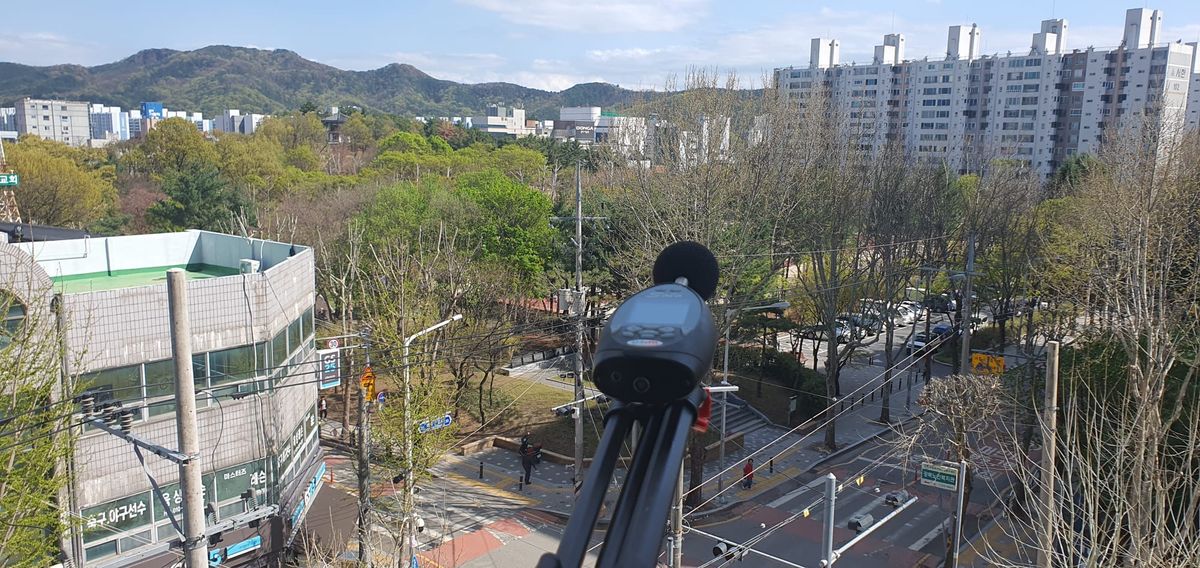
When construction noise affects daily life, the first reaction from most residents is simple:
"Why doesn't the government just stop it?"
It seems like a reasonable question.
If authorities issue fines, administrative orders, or even temporary equipment restrictions, shouldn't the noise disappear?
In reality, construction noise is rarely that simple.
Recent redevelopment projects in South Korea have once again highlighted a difficult reality: even after multiple administrative actions, nearby residents continued to experience significant construction noise.
For professionals who investigate construction noise, this outcome is not surprising.
The reason lies in the engineering—not simply in enforcement.
Construction Noise Is More Than Just Loud Equipment
Many people assume construction noise comes directly from heavy machinery.
Excavators.
Hydraulic breakers.
Dump trucks.
Rock crushers.
While these machines certainly generate noise, they are only one part of a much larger system.
Every construction site has unique characteristics that determine how sound travels.
Professionals typically evaluate:
- Construction methods
- Excavation processes
- Geological conditions
- Building layouts
- Distance to residential areas
- Terrain
- Reflective surfaces
- Weather conditions
Two sites using identical equipment may produce completely different impacts on nearby communities.
Why Rock Excavation Is Especially Challenging
Rock excavation is among the noisiest stages of civil engineering.
Unlike finishing work or structural assembly, bedrock cannot simply be removed quietly.
Heavy hydraulic breakers, drilling equipment, and excavation machinery generate high-energy impacts that produce low-frequency noise and vibration.
These sounds travel farther than many people expect.
In urban redevelopment projects, where residential buildings may be only a short distance away, reducing this type of noise becomes extremely difficult.
Stopping the equipment entirely is often impossible because excavation is essential for the project's structural progress.
This explains why authorities may impose restrictions while construction still continues.
Noise Barriers Have Limits
Residents frequently ask:
"If they installed a noise barrier, why is it still so loud?"
Noise barriers are highly effective under certain conditions.
However, they are not universal solutions.
Their performance depends on:
- Barrier height
- Source location
- Receiver elevation
- Building geometry
- Terrain
- Reflection paths
For example, residents living on higher floors often experience more noise than those at lower elevations because sound waves can travel over the barrier.
Hillsides, retaining walls, and neighboring buildings may also reflect sound back toward residential areas.
In some redevelopment sites, terrain itself becomes part of the problem.
Rather than blocking noise, the surrounding landscape can amplify or redirect it.
Administrative Orders Cannot Change Physics
Government agencies enforce environmental regulations.
Construction companies manage project schedules.
Residents experience daily disturbance.
Each group views the same situation differently.
Authorities evaluate regulatory compliance.
Engineers evaluate technical feasibility.
Residents evaluate quality of life.
These perspectives do not always align.
Even after administrative orders are issued, construction activities may continue under modified conditions because certain engineering processes cannot simply stop overnight.
This does not necessarily mean enforcement has failed.
It often means the technical limitations of construction have been reached.
What Experts Examine First
When professionals investigate construction noise, measuring decibels is only the beginning.
A comprehensive assessment typically includes:
Construction Phase
Different stages produce different noise characteristics.
Noise Source Identification
Which equipment generates the highest impact?
Sound Propagation
How does noise travel through the surrounding environment?
Terrain Analysis
Are nearby hills or structures reflecting sound?
Building Configuration
Which residential units receive the greatest exposure?
Mitigation Possibilities
Can equipment, scheduling, or barriers realistically reduce the impact?
Without answering these questions, simply knowing the measured noise level provides only part of the picture.
Engineering Solutions Require Engineering Analysis
Many construction noise disputes become emotional.
Residents feel ignored.
Contractors feel they are following regulations.
Authorities struggle to balance development with public welfare.
Technical analysis provides common ground.
Rather than focusing only on complaints, experts examine why the noise occurs and which mitigation measures are technically achievable.
In many cases, improvements come not from stopping construction entirely, but from adjusting construction methods, equipment scheduling, temporary barriers, or work sequencing.
Final Thoughts
Construction noise is one of the most complex environmental issues in urban redevelopment.
It involves engineering, environmental science, urban planning, acoustics, and public communication.
Administrative enforcement remains important.
However, enforcement alone cannot eliminate every source of construction noise.
Understanding how sound is generated, transmitted, and controlled is the first step toward practical solutions.
That is why experienced technical investigation is often more valuable than assumptions alone.
Frequently Asked Questions
Can administrative orders completely stop construction noise?
Not necessarily. Certain construction activities, especially rock excavation, cannot be eliminated entirely without affecting structural work.
Do noise barriers always work?
No. Their effectiveness depends on terrain, building height, source location, and sound propagation.
Is measuring decibels enough to understand construction noise?
No. Professional investigations also consider construction methods, geology, building configuration, and environmental conditions.
About HCRI
Housing Culture Research Institute (HCRI) specializes in construction noise, vibration assessment, environmental dispute consulting, residential noise investigations, expert education, and technical analysis for complex environmental conflicts.