Apartment Noise Management Committee in Practice (Part 2) /Why Apartment Management Offices Struggle to Resolve Noise Complaints
Apartment management offices are often blamed for failing to resolve floor noise complaints.
When apartment residents experience persistent impact noise from an upstairs unit, their first stop is usually the management office.
Yet the response often sounds familiar.
"We'll deliver a notice."
"Please contact the local apartment noise mediation center."
"Here's the number for the local government office."
To many residents, this feels like the management office is avoiding responsibility.
After working with apartment noise disputes for many years, however, we have reached a different conclusion.
The problem is not a lack of effort. The problem is the system itself.
There Is No Dedicated Apartment Noise Officer
Apartment management offices handle almost everything.
Facility maintenance.
Parking.
Accounting.
Security.
Building repairs.
Resident complaints.
But in most apartment complexes, there is no staff member dedicated solely to apartment noise complaints.
Unlike a broken elevator or a parking issue, apartment noise disputes cannot be resolved in a single visit.
Someone must:
- Listen carefully to the complainant.
- Visit the affected household.
- Meet the alleged noise source.
- Follow up days later.
- Monitor whether conditions improve.
This process requires continuity.
Most management offices simply do not have the personnel to provide it.
As a result, many complaints end with a referral to a government agency or an apartment noise mediation center.
The Bigger Problem Is the Lack of a Standard Process
Many people assume that apartment management staff lack technical knowledge about noise.
That is true.
But an even greater weakness is the absence of a standard operating procedure.
A professional complaint process should include steps such as:
- Visit the complainant first.
- Identify and document the resident's highest-priority request.
- Visit the reported household.
- Return to the complainant and explain what has been done.
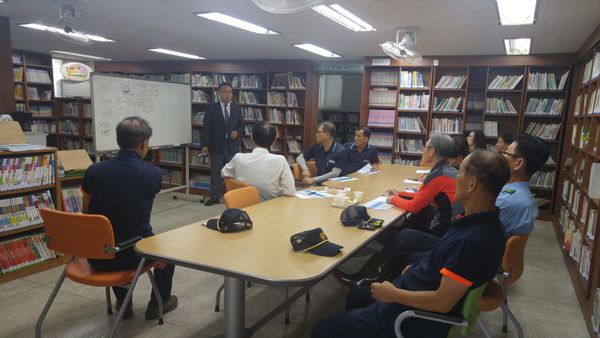
- Submit the case to the Apartment Noise Management Committee.
Unfortunately, these procedures rarely exist in written form.
Each manager handles complaints differently.
Each staff member asks different questions.
Each conversation follows a different path.
The outcome depends on personal experience rather than an established system.
Management Offices Often Lack Authority in Mediation
Even when management staff make every effort, residents may not recognize them as neutral mediators.
Some residents respond with comments like:
"Why is the management office interfering with how we live?"
Meanwhile, the complainant may believe:
"The management office didn't even explain the situation properly."
When neither side trusts the mediator, meaningful conflict resolution becomes extremely difficult.
Apartment noise disputes require more than goodwill.
They require credibility, consistency, and a transparent process.
Bringing in an Expert Is Not as Easy as It Sounds
Many people assume the solution is simple.
"Just hire an apartment noise expert."
In reality, expert consultation is rarely straightforward.
Professional services are paid through the apartment's management budget.
Using that budget usually requires internal review, administrative approval, and financial authorization.
Even after an expert visits the site, there is no guarantee of success.
The noise may not occur during the inspection.
The parties may reject the findings.
Or the conflict may already have become deeply emotional.
For these reasons, many apartment complexes prefer inviting experts to provide resident education programs rather than individual dispute mediation.
Education helps prevent future conflicts.
It does not necessarily resolve existing ones.
Evidence Alone Does Not Solve Apartment Noise Disputes
Residents often collect recordings, smartphone sound measurements, or personal noise diaries.
These materials are valuable.
But they rarely settle the dispute on their own.
Structure-borne sound can travel through concrete slabs and building frames in unexpected ways.
A recording may prove that noise exists, but not exactly where it originated.
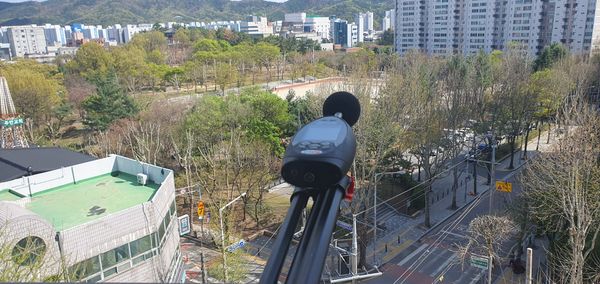
Even professional measurements may fail if the noise does not occur during testing.
Evidence supports mediation.
It does not replace it.
Simplify the Role of the Management Office
One of the biggest mistakes is expecting the management office to investigate, judge, and resolve every complaint.
That is neither realistic nor sustainable.
Instead, the management office should focus on five core responsibilities.
- Listen carefully to the resident.
- Document the resident's highest-priority request.
- Conduct an initial site visit.
- Organize the facts objectively.
- Report the case to the Apartment Noise Management Committee.
This creates a clear division of responsibilities.
The management office gathers information.
The Apartment Noise Management Committee evaluates the case.
Specialists become involved only when necessary.
Each organization performs the role it is best equipped to handle.
Apartment Noise Complaints Require a System, Not a Hero
Apartment noise disputes are among the most difficult conflicts in residential communities.
They involve emotions, daily life, and long-term relationships between neighbors.
No apartment manager can solve every case alone.
The answer is not finding a more experienced manager.
The answer is building a better system.
When management offices collect accurate information,
when Apartment Noise Management Committees conduct structured mediation,
and when specialists provide support where needed,
communities gain something far more valuable than a single successful mediation.
They gain a process that residents can trust.